Copyright 2014 Robert Clark
Robert Zubrin wrote a critique of the plasma propulsion system VASIMR here:
The VASIMR Hoax
By Robert Zubrin | Jul. 13, 2011
http://www.spacenews.com/article/vasimr-hoax
The primary criticism is that it would require unrealistically lightweight nuclear propulsion. However, Zubrin doesn't even like the idea of fast propulsion to allow short travel times to Mars. He argues in favor of using 6 month or more one-way travel times to allow free return trajectories at Mars. But the health disadvantages of long travel times such as radiation exposure, bone and muscle loss, and the
recently found eye damage and vision loss suggest we should investigate such short travel times.
Now we find there is also another reason: mechanical breakdowns on such missions of 2 or more years round trip length,
such as found with the coolant system on the ISS.
Note that the argument about free return trajectories does not hold with respect to planets with atmospheres. The Apollo missions did do a free return around the Moon, but there was no non-propulsive method to slow down at the Moon. On return to the Earth though, even Apollo had a trajectory that would send it off into space if the angle was too shallow or plunging too steeply into the Earth's atmosphere to burn up if the angle was too steep. The same could be used in addition to the propulsive method whose high efficiency would also allow it to be used for slow down at Mars.
So it is important to note we may have a short term power source instead of nuclear power, for plasma propulsion such as Vasimr at the needed lightweight.
The key point is that the power source does not need to be nuclear. According to Zubrin's article on the Vasimr it requires a power source of 1,000 watts per kg power density. This is 100 times better than what has been done with nuclear space power at 10 watts per kg. However, it is only 10 times better than standard solar space cells at 100 watts per kg. Actually more recent space solar cells get 200 watts per kg, so it is only needs to be 5 times better than those.
Now the key fact is that solar cells can put out more power if they have more concentrated light shone on them. Estimates of how much power solar cellls put out are based on the solar insolation at the Earth's distance from the Sun. But if that light is concentrated they can put out more power. In fact some Earth solar power systems get more power by using inexpensive mirrors or lenses to concentrate light over a larger area rather than using expensive solar cells over that larger area.
A disadvantage is this increases the loss due to heat and also if the light is too intense it can overload the solar cells so they don't work at all. However a recent report claims they can use concentrated light at thousands of times higher than solar insolation:
SEPTEMBER 07, 2013
Stacked Solar Cells Can Handle Energy of 70,000 Suns.
This work is important because photovoltaic energy companies are interested in using lenses to concentrate solar energy, from one sun (no lens) to 4,000 suns or more. But if the solar energy is significantly intensified – to 700 suns or more – the connecting junctions used in existing stacked cells begin losing voltage. And the more intense the solar energy, the more voltage those junctions lose – thereby reducing the conversion efficiency.
DECEMBER 16, 2011
Tiny Solar Cell Could Make a Big Difference
http://nextbigfuture.com/2011/12/tiny-solar-cell-could-make-big.html
This will be dependent on having lightweight mirrors or lenses. However another key fact is that the parabolic mirrors do not have to be telescope grade accuracy. Indeed you can find on the net videos of amateurs making their own homemade solar furnaces that also require light to be concentrated to high intensity. These homemade mirrors can be as simple as aluminum foil spread onto a cardboard frame and still concentrate light to generate thousands of degrees. Not requiring high accuracy for the mirrors suggest they can be made lightweight.
DARPA is also funding lightweight space lenses:
DECEMBER 08, 2013
DARPA shoots for 20 meter folding space telescope.
http://nextbigfuture.com/2013/12/darpa-shoots-for-20-meter-folding-space.html
Another example of how lightweight we could make the mirrors is actually to be tested in space:
Gossamer sail set to deorbit satellites.
By Jenny Winder | 30 December 2013
This solar sail has 25 square meters at only 2 kg weight. Let's suppose we only need 10 times solar concentration. This should already be within the capacity of currently used solar cells to accommodate since recent research is in the 100's to 1,000's of Suns range.
At 10 times solar concentration this means the solar cells have 2.5 square meters area in order for the mirror reflecting area to be 10 times greater. If they were 100% efficient this would be 2500 watts of power under standard solar illumination, i.e., without concentration. Solar cells though typically are only in the range of 30% efficient. So they would give 750 watts under standard solar illumination. At a 200 watts per kg power density now reached for space solar cells they would weigh 3.75 kg.
Now we are assuming the sail concentrates 10 times greater surface area onto the cells, so under this concentrated illumination they will put out 7,500 watts. The total weight of the cells and sail would be 5.75 kg. And the power to weight efficiency would be 1,300 watts per kg, sufficient for the Vasimr.
The question though is would extra mass be needed to dispense the extra heat. Low power concentrators don't need these cooling systems:
Concentrated photovoltaics.
Low concentration PV (LCPV)
Low concentration PV are systems with a solar concentration of 2-100 suns.[5] For economic reasons, conventional or modified silicon solar cells are typically used, and, at these concentrations, the heat flux is low enough that the cells do not need to be actively cooled. The laws of optics dictate that a solar collector with a low concentration ratio can have a high acceptance angle and thus in some instances does not require active solar tracking.
http://en.wikipedia.org/wiki/Concentrated_photovoltaics#Low_concentration_PV_.28LCPV.29
We only need about about 5 times concentration with currently available space solar cells without significant loss of efficiency from the solar cells to get the needed specific power.
For simplicity and to maintain the light weight we might want to use these low power concentrators. However, there might be lightweight, passive cooling systems that could be used for the high power concentrators, that can reach hundreds to thousands of Suns, that with the higher degree of concentration would still have a light weight at high power.
These methods would concentrate sunlight onto solar cells. However, solar cells are typically low efficiency, in the range of 30%. Another advantage of concentrators is that increase the efficiency. The
latest ones can get 44.7% efficiency and researchers believe they can reach above 50%.
Another method would eliminate the need for solar cells. That is to use a solar furnace. These can get temperatures as hot as the surface of the Sun by concentrating sunlight. By thermodynamics very high temperatures correspond to high efficiency conversion of heat to other forms of energy, 90% and above.
An additional problem with plasma thrusters though is the high weight compared to the thrust they put out. For VASIMR the thrust to weight ratio can be calculated to be in the range of only 1 to 4,000. See for example this report for the mass of the thruster per given power on p. 2 and the thrust per power on p. 3:
Low Thrust Trajectory Analysis (A Survey of Missions using VASIMR® for Flexible Space Exploration - Part 2).
http://www.adastrarocket.com/VASIMR_for_flexible_space_exploration-2012.pdf
Other plasma thrusters however, such as the Hall effect thruster have better thrust weight ratios, ca. 1 to 200. A recent advance may even improve on that. This report discusses "nested channel" Hall effect thrusters, which have been shown to achieve the same thrust at a lower weight:
Developmental Status of a 100-kW Class
Laboratory Nested channel Hall Thruster.
IEPC-2011-246
Table 1, Example of concentrically NHT specific mass and footprint savings, p. 5.
http://pepl.engin.umich.edu/pdf/IEPC-2011-246.pdf
The three-channel thruster in this table only weighs 320 kg. There is an inverse relationship between Isp and thrust as shown in the graph in Fig. 3 of this report on p. 3. So for the high of 5,000 s Isp in this table, the thrust would be 36 N. Still this is a 1 to 90 thrust to weight ratio, quite good for plasma propulsion. In comparison, at a 1 to 4,000 thrust to weight ratio, the VASIMR thruster would weigh nearly 15,000 kg.
In addition to the thruster though plasma propulsion systems need a power procession unit (PPU). This transforms the low voltage put out by solar cells, usually just a few volts, to the hundreds of volts needed for plasma propulsion. The PPU mass is often comparable to that of the thruster itself.
However, there may be methods to reduce or eliminate this extra mass. One method might be to put the solar cells in series like with batteries to build up the voltage. There is the question though if the solar cells can handle this higher voltage. Another possibility might be to use the recent advances in nanotechnology to produce a lightweight PPU. For instance
quantum dots can transform low frequency light to high frequency light. It might possible to adapt this method to transform low voltage to high voltage.
An exciting upcoming development is the Sunjammer solar sail scheduled for launch in January, 2015:
Solar Sail Demonstrator.
http://www.nasa.gov/mission_pages/tdm/solarsail/solarsail_overview.html#.UyWr7IUcbOw
This sail will have an area of 1,200 sq. m. at only a 50 kg weight. At perihelion, the solar irradiance is about 1,400 watts per square meter. This would give a maximum possible power of close to 1.7 megawatts at 100% efficiency. If using the new 44.7% efficiency solar concentrator cells, this would be 750 kwatts.
Then as early as next year we can test high power plasma propulsion systems that can make manned missions to Mars at travels times of weeks rather than months.
Bob Clark
UPDATE, September 1, 2015:
The use of solar concentrators to reduce the mass of solar power systems would have applications also to space solar power. Then it is notable that a recent development in carbon nanotubes may make the required mirrors 1,000 times lighter than even the Sunjammer solar sail:
Economical Space Solar Power Now Possible.
http://exoscientist.blogspot.com/2014/04/economical-space-solar-power-now_19.html
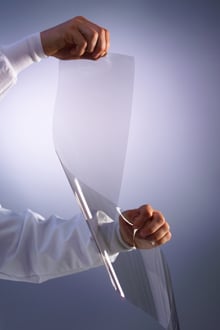


.jpg)


