Showing posts with label ISS. Show all posts

Tuesday, July 7, 2015

Ariane 5 Core plus 4 Ariane 4 side-boosters as a manned launcher, page 2: use as another ISS supply vehicle.

Copyright 2015 Robert Clark


  In the blog post "Ariane 5 Core plus 4 Ariane 4 side-boosters as a manned launcher", I suggested such a configuration would give a quicker, cheaper implementation of the Ariane 6 that would have the advantage that it could also be used as a manned launcher. 

Ariane 5 Core plus Ariane 4 side boosters added

 A recent news report gives this even greater importance, the fact that France wants to sell its stake in Arianespace to Airbus Safran:

French Divestment Will Put Arianespace in Airbus Safran’s Hands.
by Peter B. de Selding — June 10, 2015
http://spacenews.com/french-divestment-will-put-arianespace-in-airbus-safrans-hands/

 This is good news for the commercial space approach to lowering launch costs. For instance, the use of solid rocket side boosters on the Ariane 6 helps to subsidize the French military's use of solid rocket missiles. Without the French government owning a part of the company, you are freer to choose the most cost-effective approach instead.

GEO satellite launcher.
 The calculation for this configuration without an upper stage was for 15 metric tons(mT) to LEO. Much of the satellite launch market however is to geosynchronous orbit. Using an existing upper stage for this version would eliminate another development cost for the current version of the Ariane 6 which envisions a new large upper stage using the new Vinci engine.

 For this configuration use instead the already developed Ariane H10-3 upper stage. This has a 1,570 kg dry mass, 10,470 kg propellant mass, 62.7 kN vacuum thrust and 446 s vacuum Isp. Plug these numbers in for the upper stage into Schilling's launch performance calculator with the same numbers for the Ariane 5 core and Ariane 4 liquid-fueled side-boosters as used in the "Ariane 5 Core plus 4 Ariane 4 side-boosters as a manned launcher" post.

 For GEO satellites the launchers actually send the satellites to geosynchronous transfer orbit (GTO) which is a highly elliptical orbit that reaches from LEO to GEO, with the satellites onboard propellant and engines providing the final kick to a circular orbit at GEO. For the GTO orbit, enter in Schillings calculator the default perigee of 185 km, 35,000 km for the apogee, and an inclination of 5.2 degrees to match the latitude of the Ariane launch site. Then the calculator gives the results:


Mission Performance:
Launch Vehicle:  User-Defined Launch Vehicle
Launch Site:  Guiana Space Center (Kourou)
Destination Orbit:  35000 x 185 km, 5 deg
Estimated Payload:  7948 kg
95% Confidence Interval:  6380 - 9952 kg

"Payload" refers to complete payload system weight, including any necessary payload attachment fittings or multiple payload adapters
This is an estimate based on the best publicly-available engineering and performance data, and should not be used for detailed mission planning. Operational constraints may reduce performance or preclude this mission.


Lowered development costs reduces launch pricing. 
 Replacing the solids with the liquid-fueled boosters that had already been used on the Ariane 4 would eliminate the development costs of having to develop the new solids now planned for the Ariane 6. Since the need to recoup development costs amounts to a significant proportion of the launch price of rockets, the minimal additional development costs would make it much easier for this version of the Ariane 6 to meets its low launch cost goals. And in addition to the much lowered development costs, the minimal additional development would lead to a rapid route to its deployment.

 Also, ESA is considering some versions of the reusability in returning the engine compartment of the core stage. However, by using liquid side boosters you can make the side boosters reusable as well by doing a vertical landing on those.

 Inexplicably, in ESA trade analyses of liquid-fueled versions for the Ariane 6 versus solid booster versions, no consideration was given to the major advantage of liquid fueled versions of providing Europe with an independent manned launch capability. Note this all liquid implementation would give a manned vehicle using four liquid-fueled boosters attached to the core stage, as both the
Russians and the Chinese have done to produce their manned launchers. And because of the rapid development time due to the minimal new development needed, Europe could probably field this manned launcher by the time the Americans field theirs, expected in 2017.

Use as an ISS supply vehicle.
 Last months failure of the Falcon 9 launch to resupply the ISS reveals another reason such fast development time is important. All three of the current ISS cargo launchers have experienced recent launch failures. Then another launcher to serve as a cargo supply vehicle would be useful. Because it would have a short development time and low development cost, this version could serve as valid alternative to the other launchers. Then this opens up another revenue source for this all-liquid version of the Ariane 6.

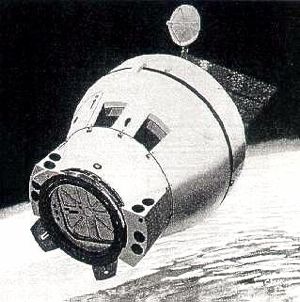
 Moreover, the Cygnus capsule, being European, could also be used as a low cost cargo capsule, rather than the expensive ATV.


     Bob Clark

Saturday, September 28, 2013

Free your mind, and the rest will follow.

Copyright 2013 Robert Clark 

The story has been told that when the Native Americans first saw the ships of the Europeans they could not grasp what they were seeing because it was so outside their experience. I've always been dubious of that story. But a recent study suggests something of this nature can happen:


Science confirms: Politics wrecks your ability to do math.

By Chris Mooney
Everybody knows that our political views can sometimes get in the way of thinking clearly. But perhaps we don’t realize how bad the problem actually is. According to a new psychology paper, our political passions can even undermine our very basic reasoning skills. More specifically, the study finds that people who are otherwise very good at math may totally flunk a problem that they would otherwise probably be able to solve, simply because giving the right answer goes against their political beliefs.
http://grist.org/politics/science-confirms-politics-wrecks-your-ability-to-do-math/

 So preconceived notions can affect your ability to reason effectively, even among the smartest among us. I'm reminded also of a brain puzzler stated on the "All in the Family" TV show during the '70s. Gloria presented to the family the following:


 A father driving his young son were in an accident and the father was killed, while the son was injured but survived. When the child was brought to the hospital, the surgeon said, "I can't operate on this boy. He's my son."


 That was a puzzler the rest of the family on the show couldn't solve then and neither could I when I first saw the episode back in the '70s. The answer of course is that the surgeon was the boy's mother. 

 With the advance of women in medicine now with most med school graduates being women that probably would not be such a great puzzle to solve now as then. But it indicates how your preconceived ideas can limit your ability to solve really simple problems.
  
 Something like this is currently occurring at NASA. The Constellation program that would have returned us to the Moon has been cancelled due to high cost. However, many space advocates in the public and in Congress would prefer us to return to the Moon rather than the asteroid mission NASA is embarking on. No doubt because of these calls to return to the Moon, NASA released a study on a return to the Moon without Constellation:

Dual SLS launch campaign required for NASA’s Lunar return.

August 21, 2013 by Chris Bergin
http://www.nasaspaceflight.com/2013/08/dual-sls-required-nasas-lunar-landing-option/

 I was surprised to read that the study assumed an Altair-sized lander at the ca. 45 mT range. But the Altair's size was a big reason driving Constellation's large size and therefore great expense. And in fact by using two SLS launches the mission size in this study turns out to be even larger than Constellation. 


 It was as if the study authors had never heard of the Apollo lander that was only one-third the size of Altair. The misperception that a lunar lander has to be as large as the Altair as well as being built from scratch rather than using existing propulsive stages and crew capsules drives the false conclusion that an additional $10 billion expense would be needed for such a lander, and therefore a lunar return is unaffordable


  A further misperception is what is the mass that could be transported to LEO by the SLS. The Block 0 version of the SLS was supposed to use three SSME's on the core and use the standard 4-segment SRB's used on the shuttle. This would have a 70 mT payload capacity to LEO.


 However, NASA decided to bypass the Block 0 and go directly to the Block 1. This would stretch the core tank by a third and use a fourth SSME. It would also use a fifth-segment on the SRB's. So the size and thrust of the core would be increased by 33% and the size and thrust of the SRB by 25%.


 Despite these increases in both size and thrust, NASA was still quoting 70 mT capacity for the Block 1 SLS. Logically the payload should have been increased but NASA continued to quote 70 mT. Finally, NASA did release a report that acknowledged the payload to LEO would be 90+ mT:


SLS Dual Use Upper Stage (DUUS).

http://ntrs.nasa.gov/archive/nasa/casi.ntrs.nasa.gov/20130013953_2013013757.pdf


  This is important because at 90+ mT it is much easier to do a manned lunar landing mission using a single launch of the SLS, assuming you use a lander at the Apollo scale not the Altair scale. Indeed it would be possible at the first launch of the SLS in 2017.


 Then it was these preconceived notions that prevented NASA from seeing that we can in fact return to the Moon as early as 2017, and not even at significantly greater expense than that already being spent on the SLS and Orion capsule.


  Another mental block is operating in regards to how much such BEO missions should cost. NASA's commercial space program has been a great success in producing both launchers and spacecraft at as much as a 90%(!) savings over what NASA would normally have to pay for them. If any other federal agency had managed to reduce costs for normally multi-billion dollar programs to only a few hundred million dollars this would be hailed to the skies as a remarkable success in reducing costs to the American tax payer. Yet NASA was regarding it as if it were something they were only allowed to talk about in hushed tones.

 Finally, NASA has released a report detailing the savings possible under the commercial space approach:

The Commercial Leverage Model and Public/Private Partnerships.
Daniel J. Rasky
Director, Emerging Commercial Space Office
NASA Ames Research Center
Founder & Director, Space Portal
NASA Research Park
Moffett Field, CA 9403
September 11, 2013
https://dl.dropboxusercontent.com/u/47645641/AIAA_2013.pptx 

 Imagine then these cost savings applied also to BEO missions to the Moon or asteroids. This would make these missions much more fiscally feasible. It was NASA not officially acknowledging such cost savings that made it so that they could not study possibilities for returning to the Moon in a low cost fashion.

 For return to the Moon missions conducted by NASA, NASA may initially choose to use the, still expensive, SLS launcher. However, just as NASA has realized commercial space can make flights to the ISS much more cheaply than the shuttle, so also can commercial space make flights to the Moon much more cheaply.

 Indeed, by going small, going commercial, and using preexisting propulsive stages and crew modules, crewed and cargo flights to the Moon can be made for comparable costs to what we are paying the Russians to send a crew of three to the ISS.  

 The conclusion you draw is that a Moon base can be sustained on the Moon for what we are currently paying to sustain the ISS.

 Just free your mind, and the rest will follow.


   Bob Clark

Sunday, September 22, 2013

SLS for Return to the Moon by the 50th Anniversary of Apollo 11, page 5: A 90+ metric ton first launch of the SLS.

Copyright 2013 Robert Clark

 Finally someone at NASA acknowledges that the Block 1, first version of the SLS to launch in 2017 will have a 90+ mT payload capacity not the 70 mT always cited by NASA:

SLS Dual Use Upper Stage (DUUS).
http://ntrs.nasa.gov/archive/nasa/casi.ntrs.nasa.gov/20130013953_2013013757.pdf

 This is important since it means we will have the capability to do manned lunar landing missions by the 2017 first launch of the SLS.
 As discussed in the blog post SLS for Return to the Moon by the 50th Anniversary of Apollo 11, page 2: Orion + SEV design, a 90+ metric ton launcher means we can even use the Orion as the crew capsule. This is important for political reasons since the great expense spent on it means there would be a great desire among its supporters to see it be used. 
 There also is a preference at NASA for the departure stages from the lunar surface and from lunar orbit to use hypergolics, which have the surety of igniting on contact. Then another advantage of a 90+ mT SLS is that the heavier hypergolics can be used for these stages rather than the lightweight hydrogen-fueled stages I suggested in that blog post. In an upcoming post I'll show using existing hypergolic stages how we can get a lunar landing mission at less than 90 mT to LEO.
  For any of these methods it is important to use currently existing stages rather than developing them from scratch. A big reason that NASA ruled out a return to the Moon was because of the assumption that it required the development of new Altair-sized lander at a $10 billion development cost. But the need for a 45 mT Altair-sized lander is provably false as shown by the Apollo lander at one-third the size. And simply adapting already existing stages reduces the cost to a fraction of that needed for an Altair.
 So NASA is making expensive policy decisions such that we can't return to the Moon based on provably wrong assumptions. One is that the Block 1 would only have a 70 mT payload capability and so would require an expensive upper stage to increase the payload to do lunar missions, and another is that a lunar lander would require an additional $10 billion development.
 In fact, once you recognize the, obvious, fact that a lunar mission does not require an Altair-sized lander then so many possibilities become apparent. We did not have the great variety of existing launchers back in the Apollo days that we have now. If you allow your lander to be at or smaller than the Apollo lander then there are a variety of launchers that could be used for lunar missions, not just the SLS. And since they are already existing, or will be soon such as the Falcon Heavy, there would be no huge, multi-billion dollar development cost to use them. 
 So likewise also is the case for the in-space stages needed. They are already currently existing and would require relatively minor adaptations to be used for a lunar lander, for example.
 Indeed we could do manned lunar missions for what NASA is currently paying the Russians to send a crew of 3 to the ISS. The implications of that are jarring: we could have regular manned flights to the Moon for the same amount as what we are currently paying to send regular manned flights to the ISS.  And since the cargo flights to the Moon would be similarly low cost and using Bigelow style lightweight habs would allow a habitation module to be sent to the Moon on a single flight, we could have a manned lunar base for the same amount as what we are paying to sustain the ISS.
 All this comes from simply the mental reset that a lunar mission does not require the $10 billion Altair.
 Free your mind, the rest will follow.

    Bob Clark

Note: thanks to M. Moleman for discussing the NASA report "SLS Dual Use Upper Stage (DUUS)" on his blog.

Saturday, June 8, 2013

On the lasting importance of the SpaceX accomplishment, Page 4: how the Ariane 6 can beat both SpaceX and the Russians.

Copyright 2013 Robert Clark


Europe Urged To Halt Work on ‘Dead End' Ariane 6 Design.
By Peter B. de Selding | May. 30, 2013
The academy is urging the agencies to stop work on the Ariane 6 they approved in November with a view to beginning full development in 2014. The academy-favored rocket would use liquid propulsion instead of solid, and would face four more years of preparatory work before moving to full development in 2018.
In the meantime, the academy says, Europe should focus on an upgraded heavy-lift Ariane 5 that would fly for a decade before both it and the Europeanized version of Russia’s medium-lift Soyuz rocket are replaced by the all-liquid Ariane 6 in 2027. This rocket, called Ariane 5 ME, has been in design for several years. Continued work on it was approved, alongside Ariane 6, at the November meeting of European Space Agency (ESA) governments.
http://www.spacenews.com/article/launch-report/35546europe-urged-to-halt-work-on-%E2%80%98dead-end-ariane-6-design
 The Academy should also emphasize another key advantage of the liquid-fueled version of the Ariane 6 that it could be used for a manned launch vehicle.
 Note that Russia is raising their prices to $73 million per seat or $220 million for three. This is greater than the launch cost of the full 20 metric ton class Ariane 5. The smaller Ariane 6 would certainly be cheaper than that. By producing this liquid fueled Ariane 6, Europe could also get their own manned space flights and more cheaply than by paying the Russians.
 Both Russia and China have their own manned spaceflight programs, as will the U.S. in the near, short time frame. And even India and Japan are planning their own manned spaceflight programs. The Japan case is quite notable in that their plan is to use twin cryogenic engines of similar characteristics to the Vulcain II.
 The European Union has been the highest economic power or a close second to the U.S. in the world over the last few years. It should be regarded as unacceptable by European space advocates, private, governmental, and industry, that there has been no plan to give Europe a manned space program as with these other space agencies.
 Such a manned-capable launcher could be done more quickly and cheaply by using a commercial space approach. The Falcon 9 and the Antares only took 4 years and a few hundred million dollars in development cost that had to be paid by NASA.
 I also estimate the cost per launch of a single stage version could be done for half the $127 million cost given by the Academy in that report for their version of the Ariane 6, vastly undercutting the Russians:

On the lasting importance of the SpaceX accomplishment, Page 3: towards European human spaceflight.
http://exoscientist.blogspot.com/2013/05/on-lasting-importance-of-spacex.html

 Here's an argument for producing the Ariane 6 at a faster time frame than just 2027. The Ariane 6 is supposed to be one-half to one-third as expensive as the Ariane 5. The Ariane 5 is already being used to deliver cargo to the ISS but using the very expensive to develop and produce ATV. In fact ESA doesn't want to produce any more ATV's after the last one to launch in 2014.
 But if you have this less expensive launcher in the Ariane 6 then you have a much less expensive route to sending cargo to the ISS. But then you need a pressurized capsule to transport it. Why spend the expense of developing a new small pressurized capsule when you already have one in the European developed Cygnus? (By the way this raises an interesting economic question I'll discuss at the end.)
 SpaceX is charging NASA $133 million to transport a maximum of 6,000 kg to the ISS. Note this is well above the launch cost of the Falcon 9 alone. The large extra cost is due to the use of the expensive Dragon capsule. The Ariane 6 would have comparable payload capacity as the Falcon 9 but using a 2,000 kg lighter capsule in the Cygnus. Then it could be at or above the cargo capability of the Falcon 9 to the ISS. And from the estimated launch cost of the Ariane 6 and the low cost of the Cygnus compared to the Dragon their price could be at or below that of the Falcon 9/Dragon. How's that for wanting to be competitive with SpaceX?
 Now, the Academy wants ESA to make a liquid-fueled version of the Ariane 6 instead of the planned solid-fueled one. Imagine you have that and it is being used to send cargo via the Cygnus capsule to the ISS. It's not much of leap at all that if you add life support and a heat shield to the Cygnus then you would have a European vehicle capable of sending astronauts to the ISS as well. And you could do it at a price to undercut the Russians.
 I want to argue again here for the commercial space approach for accomplishing this. The 2027 time frame for such a liquid fueled Ariane 6 is following the usual glacial pace of government financed space programs. This would be near the end of the ISS (expected) extended life time. However, both SpaceX and Orbital Sciences by following the commercial space approach were able to develop their launchers in 4 years. Commercial space is both cheaper and faster than government space.
 To do the cost sharing of commercial space though the industry partners, or their investors, would have to be convinced it could be profitable. Note that SpaceX has gotten a $1.6 billion contract from NASA for delivering cargo to the ISS. The $127 million per launch cost estimated by the Academy is coming from the large, billion dollar, development costs under the usual governmental financing approach that would need to be recouped. Commercial space has proven though that both total development cost and the portion paid by the government are a fraction of those of the usual governmental financing. Then getting a similar billion dollar ISS supply contract as SpaceX and with a development cost that, literally, might only be a few hundred million dollars, would result in such a contract being highly profitable.

 About that economic question I mentioned above, Orbital Sciences paid for the development of the Cygnus to the Italian Space Agency(ISA). But certainly the ISA would not want to turn over the full rights to the Cygnus to a foreign company. It's quite likely ISA retains ownership of the Cygnus. This becomes interesting in regards to the price they would charge for the Cygnus compared to the price Orbital Sciences would charge.
 Because Orbital paid for the development of the Cygnus they would want to recoup that cost in the price they charge. But the ISA does not have to recover that cost. This means they could charge much less. But then why would anyone pay for the higher cost from Orbital when they could get it cheaper from the ISA?
 A puzzling question. It may be Orbital retains the rights to sell the Cygnus to NASA or even for all American launches.


    Bob Clark

Friday, June 1, 2012

On the lasting importance of the SpaceX accomplishment.

Copyright 2012 Robert Clark


Credit: NASA

 SpaceX deserves major kudos in successfully launching the Dragon spacecraft, docking with the ISS, and recovering the capsule on Earth. However, it is important to note there is nothing especial innovative of the SpaceX designs. Their engines are no more efficient than the engines on the original Atlas rocket of the 1960's that first lofted John Glenn to orbit. And their stages use the same lightweighting techniques known since the 1970's. SpaceX has said they don't want to patent their designs because it would give their competitors, such as China, an easy route to copying their designs. But I wonder if the real reason is that they are the same techniques known for decades. Their important innovation is that they used good business practices in privately developing their launchers and spacecraft to cut the development costs by 90%(!)

SpaceX Might Be Able To Teach NASA A Lesson.
May 23, 2011
By Frank Morring, Jr.
Washington
“I think one would want to understand in some detail . . . why would it be between four and 10 times more expensive for NASA to do this, especially at a time when one of the issues facing NASA is how to develop the heavy-lift launch vehicle within the budget profile that the committee has given it,” Chyba says.
He cites an analysis contained in NASA’s report to Congress on the market for commercial crew and cargo services to LEO that found it would cost NASA between $1.7 billion and $4 billion to do the same Falcon-9 development that cost SpaceX $390 million. In its analysis, which contained no estimates for the future cost of commercial transportation services to the International Space Station (ISS) beyond those already under contract, NASA says it had “verified” those SpaceX cost figures.
For comparison, agency experts used the NASA-Air Force Cost Model—“a parametric cost-estimating tool with a historical database of over 130 NASA and Air Force spaceflight hardware projects”—to generate estimates of what it would cost the civil space agency to match the SpaceX accomplishment. Using the “traditional NASA approach,” the agency analysts found the cost would be $4 billion. That would drop to $1.7 billion with different assumptions representative of “a more commercial development approach,” NASA says.

SpaceX Might Be Able To Teach NASA A Lesson – Aerospace (wordpress.com)

 Space travel can become world-wide once the implications of what SpaceX has done are fully realized: development of a manned spaceflight capability can be accomplished, as privately developed, at a cost of a few hundred million dollars, not the several billion dollars long thought.

 That is an overwhelmingly important fact. It means that all the large aerospace companies in the world can afford to privately develop their own manned launchers and/or spacecraft and expect to make a profit on it. It means nearly every country in the world can afford to have their own manned spaceflight capability.

 Example, here's a British manned spacecraft that was studied in the 1980's:

Multi-Role Recovery Capsule.

British manned spacecraft. Study 1987. Britain was the only European Space Agency member opposed to ESA's ambitious man-in-space plan, and the British conservative government refused to approve the November 1987 plan.
However, the British aerospace industry did propose some interesting alternatives, such as the $2-billion 'Multi-Role Recovery Capsule'.
Multi-Role Recovery Capsule (astronautix.com)
 The important fact is SpaceX has shown with its Dragon capsule and NASA has confirmed with its CCDEV program that privately developed spacecraft, perhaps with governmental seed money, can be developed for costs in the few hundred million dollars range. So the BAe could develop this spacecraft, not for $2 billion, but for an amount comparable to that spent on the Dragon, ca. $300 million.

 Likewise, the individual nations of the ESA could develop their own indigenous manned spaceflight capability by following this approach. The result? Manned spaceflight becomes routine world-wide.

 That is the lasting importance of what SpaceX has accomplished.


     Bob Clark

Note: the original version of this post said Alan Shepard was lofted to suborbit on the Atlas. That was actually on the Mercury-Redstone. John Glenn was launched to orbit on the Mercury-Atlas. - B.C.

Thursday, May 10, 2012

On Commercial Flights to the ISS and "space tugs".

Copyright 2012 Robert Clark 


The SpaceX flight to the International Space Station has been delayed multiple times:

1st Private Rocket Launch to Space Station Delayed. 
by Denise Chow, SPACE.com Staff Writer 
Date: 16 January 2012 Time: 01:51 PM ET
http://www.space.com/14251-launch-delay-spacex-dragon-spaceflight.html

SpaceX launch to station faces delay.
By WILLIAM HARWOOD 
CBS News 
"KENNEDY SPACE CENTER, FL--The long-awaited launch of a commercial 
cargo ship bound for the International Space Station almost certainly 
will be delayed from May 7 to at least May 10 and possibly longer, 
sources said late Tuesday, to give company engineers additional time 
to complete pre-flight tests and checkout..." 
05/01/2012 11:18 PM Filed in: Space News | Commercial Space | International Space Station 
http://www.cbsnews.com/network/news/space/home/spacenews/files/3f8a43db532f88e3f0ed6b8fe9876eeb-403.html

 SpaceX has said they need to do additional testing of the software controlling the link-up, understandable when a $100 billion asset in the ISS could be at risk.
 It would seem prudent for SpaceX to do several test runs rendezvousing with orbiting satellites before attempting the link up with the ISS. The current plan is not for Dragon to perform the final link-up with ISS under its own power and navigation capabilities but just to get close enough for the robot arm to grapple it and pull it to the station to dock with it. So to test this, all the Dragon has to do is demonstrate the ability to get close enough to some orbiting satellite without colliding with it, to within a similar distance as it would be to the ISS. It might be able to do this several times with different satellites to further demonstrate this capability.  
 With several commercial companies proposing private spacecraft to dock with the ISS this would appear to be a common problem. Robert Zubrin proposed an interesting solution in his book Entering Space: Creating a Spacefaring Civilization. He suggests having a "space tug" attached to the the station specifically to ferry in approaching cargo and crew spacecraft:

 "NASA managers are understandably jittery about the idea of just anybody flying up and attempting to dock their Radio Shack-wired cheapo spacecraft with one of these assets.
 "One solution that might get past this problem would be the development, by NASA, of a proximity operations vehicle (a "proxops" stage) that would hang around the station and grab resupply payloads delivered to the general vicinity by commercial suppliers."
Entering Space, p. 68.

 This would provide another use of the "space tugs" that have been proposed for orbital satellite servicing:

Satellite Refueling in Orbit, Coming Soon? 
By Steve Rousseau 
October 17, 2011 5:00 PM 
http://www.popularmechanics.com/technology/military/satellites/satellite-refueling-in-orbit-coming-soon

Space Infrastructure Servicing. 
http://en.wikipedia.org/wiki/Space_Infrastructure_Servicing 

thus providing another income stream to the company(s) that produce the tugs.
  As for the satellite servicing business plan, according to the "Satellite Refueling in Orbit, Coming Soon?" article a satellite may last 10 to 15 years. And according to the "Space Infrastructure Servicing" wikipedia page, 200 kg of fuel may provide an additional 2 to 4 years of life. So it might take 100 kg per year for fuel, and over 10 years would require 1,000 kg.
 The cost to get anything to GEO, including this fuel, is in the range of $20,000 to $25,000 per kg. So for 1,000 kg of fuel to get to GEO for satellite refueling it would cost perhaps $25 million. But this would double the life of the satellite since it would again have a full fuel load for 10 years. So for $25 million you saved the satellite companies from paying, say, $300 - $500 million, to purchase and launch a new satellite.
 So even if you charged 4 times the usual price to get to GEO for this fuel, the satellite companies could still consider this a bargain.
 You would need a small reusable servicing spacecraft to be launch from the payload bay of the launch vehicle to transport the fuel to GEO. If you use LH2/LOX propellant for this spacecraft like the Centaur upper stages, then it takes about the same amount of propellant to get from LEO to GEO, as the mass of the (spacecraft + payload), the payload being the refueling fuel in this case. The dry mass of the spacecraft is only a small proportion of the propellant as indicated by the Centaur upper stage, about 1/10th.
 So a ca. 20,000 kg cargo capacity of the current largest launchers could be made up of half LH2/LOX propellant for the space tug and half the refueling fuel for the satellites. That's 10,000 kg of refueling fuel. If you do charge the satellites companies 4 times the usual rate to GEO to $100,000 per kg for this fuel, then that's potentially $1 billion revenue from that one launcher flight.
 The estimate of a charge of $100,000 per kg of the refueling fuel to be delivered to satellites in GEO may seem high but it's actually less than a price that has been quoted by a company planning on doing such refueling missions. On that "Space Infrastructure Servicing" wikipedia
page is given this ref. to an article on satellite servicing:

de Selding, Peter B. (2011-03-14). "Intelsat Signs Up for Satellite Refueling Service".
Space News. Retrieved 2011-03-15. "If the MDA 
spacecraft performs as planned, Intelsat will be paying a total of
some $200 million to MDA. This assumes that four or five satellites
are given around 200 kilograms each of fuel. ... The maiden flight of
the vehicle would be on an International Launch Services Proton
rocket, industry officials said. One official said the MDA spacecraft,
including its 2,000 kilograms of refueling propellant, is likely to
weigh around 6,000 kilograms at launch."

http://www.spacenews.com/satellite_telecom/intelsat-signs-for-satellite-refueling-service.html

 So for this company they are actually charging $200,000 per kg of the refueling fuel.


      Bob Clark 

Could Blue Origin develop a lander for Artemis III?

Copyright 2025 Robert Clark SpaceX is coming under increasing criticism for its delay in developing the Starship lunar lander: U.S. Is Losin...