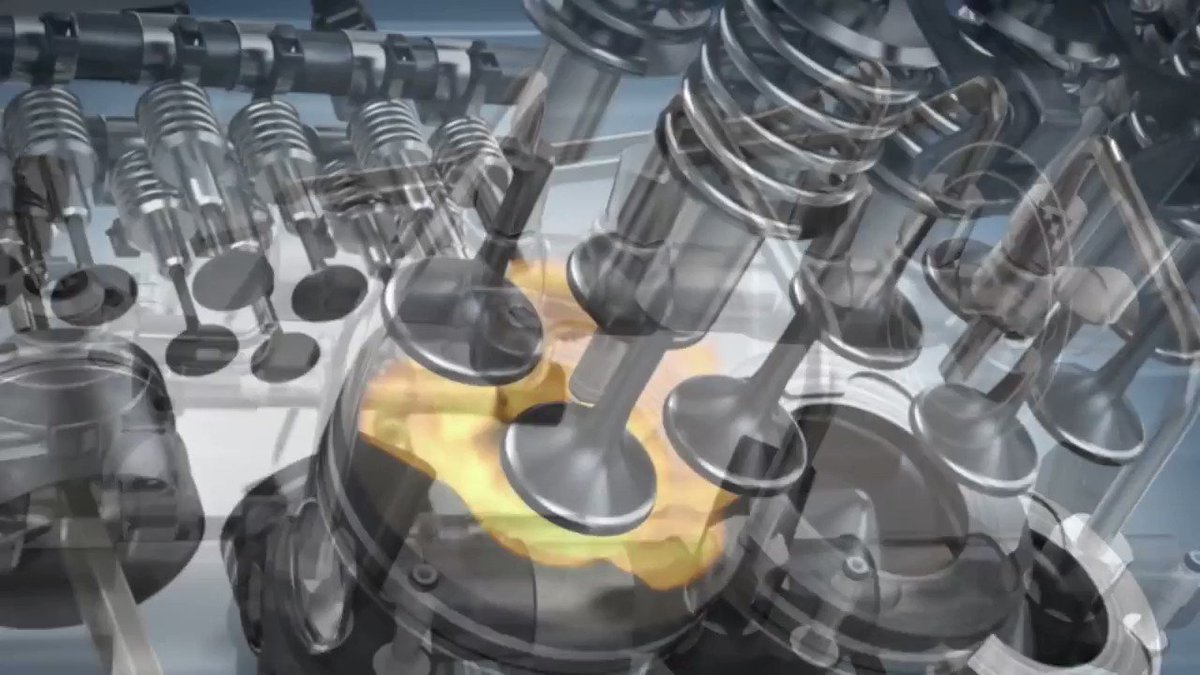
The key question: does this fact about jet engines also hold for rocket engines?
If so, increasing a turbopump rocket engine power just 10% to 15% cuts engine life in half. And conversely, decreasing it by 10% to 15% doubles engine life. And if so, would this still work if we repeated the concept multiple times? If we reduced the thrust by .9^5 = .60, i.e., to 60%, which most turbopump engines can manage, then we could increase the lifetime by a factor of 2^5 = 32 times? Then a Merlin engine with a lifetime of, say, 30 reuses by running it only 60% power could have its lifetime extended to 1,000 reuses?
This would be in the range of number of reuses of the type of jet engines used on long haul flights. Rocket engines with that number of reuses probably also would allow “gas and go” operation. That is, no major refurbishment needed in between flights, as with jet engines.
Is reduced temperature the key?
In examining this question of rocket engine longevity versus jet engine longevity I once hypothesized it had to do with the high temperatures rocket engines operated at, typically ca. 3,000 °C, whereas jet engines might only operate at ca. 1,200 °C to 1,500 °C.
It might be thought it would be the high pressures of rocket engines but that can’t be the primary reason since automobile diesel engines can operate at hundreds of bars of pressure, above even that of rocket engines for many hours of service:
The pump pressures in rockets are impressive, but let's not forget that the injection system in modern diesel engines operate at 2500 bar. They are also fast enough to accomplish up to eight separate fuel injections with each cylinder cycle.
Bosch CRS3-25.
https://youtu.be/T7o2hvoJE-Q
The aerospike is a method of altitude compensation for a rocket nozzle that provides the optimal expansion for the ambient air pressure all the way to orbit. Two ways of doing this is one, to use a toroidal combustion chamber and exhaust the flow down the sides of the spike.
Another way is to use multiple small combustion chambers that each separately exhaust down the sides of the spike.
In both cases the exhaust flow is initiated at only the top of the spike. However, a problem is converting a cylindrical combustion chamber to a toroidal one is an expensive process.
Another problem would be for the case of a Falcon 9 or a SuperHeavy where the entire base area is covered by the multiple engine bells there would be no room to place a spike below it.
But a way it could be done would be to arrange the various engines in three dimensions down the sides of the spike:
UPDATE, 1/10/2023
The above was for a multi-engine stage. But there is a way to emulate this for a single engine to produce a 3D level exhaust flow as for the multi-engine case.
Imagine concentric rings attached to the bottom of the exhaust nozzle of the single engine
The exhaust would flow between the separate rings. Now imagine each ring extended down with the length of each ring extending down more as you proceed further inward.
The exhaust flow would follow the exterior of an aerospike shape as before.
We have now two landing attempts by the reusable F9 first stage onto the SpaceX barge. Both were unsuccessful. From the appearance of both failed landings it would appear that the capability to hover could have made both landings successful:
About this latest test landing, Elon Musk in a Tweet has acknowledged that not being able to hover will result in a high g landing:
@ID_AA_Carmack Thanks! 3 of 9 engines are lit initially, dropping to 1 near ground. Even w 1 lit, it can't hover, so always land at high g - Elon Musk (@elonmusk) April 15, 2015
This is confirmed by the rather high rate of descent apparent in the video, even though, as has been reported, the video is slowed down.
Another disadvantage of not having hovering capability is apparent in the video. In correcting for mistakes in the angle of tilt, the engine having limited throttle capability will tend to over correct. That is, without hover and its low thrust capability, you can't make fine adjustments to the rocket orientation. Then at low altitude with little time to make corrections to the over-corrections, this can lead to failed landing due to the need for repeated adjustments and readjustments.
In the blog post "Merlin 1A engine for a hovering Falcon 9 v1.1 first stage" I suggested one possible solution to the hovering question would be by using the lower thrust Merlin 1A engine. However, it would have to be made throttleable for this to work. In further updates to that blog post, I suggested either using the preburner exhaust or using variable size nozzles.
Indeed all the proposals discussed in the "Altitude compensation attachments for standard rocket engines, and applications" post could also be used to make variable nozzle attachments to the engine nozzles to reduce the thrust when needed to allow hovering. For instance the carbon nanotube "rubber" attachment could be made to restrict the exit area to reduce the thrust and the "internal spike" proposal could be made to flare out to direct some proportion of the thrust laterally outwards rather than downwards to reduce the downwards thrust.
These would reduce the efficiency of the engines, i.e., the Isp would be decreased for the hovering proportion of the flight. However, the altitude compensation attachments actually increase the payload perhaps as much as 25% for multi-stage rockets so overall the result will still be an improvement of the payload capacity.
These altitude compensation attachment proposals do need more R & D work however, and SpaceX might want a quicker fix that can be attached quickly to the engines, or likely just the central engine for the landing phase.
A possibility is suggested by this collapsible vegetable steamer:
You would make an attachment like this that could flare out or be closed up, except it would have no holes on the sides. The open position would be usual formation used during the flight. The closed up position would be used only during hover to restrict the thrust.
Another simple attachment might be the exhaust steering vanes used on rockets prior to the advent of engine gimbaling for steering:
They could be used to direct a portion of the thrust laterally to reduce the downward thrust.
Bob Clark
UPDATE, April 21, 2015:
Someone suggested to me another method to restrict the thrust to allow hovering, the variable nozzles put on some fighter jet engines: