Showing posts with label Delta K. Show all posts

Thursday, September 14, 2023

Could ‘Oumuamua be a spent rocket stage?

Copyright 2023 Robert Clark


 I was interested to read of a supposed asteroid passing near Earth turning out to be a Centaur upper stage launched in 1966. Because of the oddities of 'Oumuamua I wondered if the same could be true of 'Oumuamua as well.


 This occurred to me in reading Avi Loeb discussing 'Oumuamua in his book, ExtraterrestrialHe noted it had some small changing acceleration as if by outgassing. This would be the case if say a rocket stage developed a small hole and was outgassing the residual propellant left in the rocket after burnout even years later.


 Because the Centaur rocket stage is bright white I wondered if such a stage could be visible in asteroid surveys at such a distance as 'Oumuamua was seen, about 25 million km at closest approach to Earth. The Centaur is only 3 meters wide by 12 meters long. 'Oumuamua's cylindrical shape is also notable. Also notable is Spitzer space telescope could not detect it in the infrared. The explanation given was a bright, i.e., reflective, object would heat up less, as it reflects much of the incident light, and so it was concluded Oumuamua was among the brightest of comets, assumed a comet because of the outgassing:


NEWS | November 14, 2018
NASA Learns More About Interstellar Visitor 'Oumuamua
Small but Reflective
The new study also suggests that 'Oumuamua may be up to 10 times more reflective than the comets that reside in our solar system — a surprising result, according to the paper's authors. Because infrared light is largely heat radiation produced by "warm" objects, it can be used to determine the temperature of a comet or asteroid; in turn, this can be used to determine the reflectivity of the object's surface — what scientists call albedo. Just as a dark T-shirt in sunlight heats up more quickly than a light one, an object with low reflectivity retains more heat than an object with high reflectivity. So a lower temperature means a higher albedo.
https://solarsystem.nasa.gov/news/759/nasa-learns-more-about-interstellar-visitor-oumuamua/


But this would also be the case for a rocket stage painted white. Could the Centaur stage be visible at 25 million km distance by optical telescopes in being bright white?


 But there is also the issue of the fact 'Oumuamua was on a trajectory suggesting escape velocity. In Loebs book he discusses that asteroids can be ejected from their parent systems by interactions with other planets in their systems. Then what occurred to me is whether a spent rocket stage could reach solar system escape velocity by the slingshot effect used on some of our spacecraft to get additional speed.


 The possibility I was thinking about was the New Horizons mission. The spacecraft was given high initial speed by the stages sending it to the outer solar system but then additionally to that it was first directed towards Jupiter for a Jupiter slingshot effect.


 The NH spacecraft was given escape velocity at Jupiter after the gravity assist though actually aimed at Pluto.


 But suppose the Centaur, which was the upper stage to the Atlas V launcher, was also aimed at Jupiter in order to get NH there. There was an additional solid 3rd stage carrying the NH that got a slingshot effect from Jupiter. But it may have been the Centaur was aimed at Jupiter as well.


 Now suppose the Centaur on reaching Jupiter happened to be so aimed, unintentionally perhaps, that Jupiter's orbital motion around the Sun plus the slingshot effect would be sufficient to give the Centaur solar system escape velocity. 


 But the aiming, whether unintentional or not, would have to be that rather than heading directly out of the solar system it would be headed towards the inner solar system.


 But that’s where idea encounters problems. On calculating ‘Oumuamua’s trajectory backwards from its sighting near Earth, it appears to have had an incoming trajectory nearly perpendicular to the plane of the Solar System, at 123 degrees, as described by Adam Hibberd


 It doesn’t seem possible that the Centaur after it’s gravity assist at Jupiter would come into the inner solar system at such a high angle. 


 Another problem is the closeness of the flyby’s of Mercury, Venus, and Earth by ‘Oumuamua. 


 See discussion here:


Further strangeness of 'Oumuamua.


http://exoscientist.blogspot.com/2023/09/further-strangeness-of-oumuamua.html


 It doesn’t seem reasonable that a rocket  stage after doing a close flyby of Jupiter would subsequently also do ones of Mercury, Venus, and Earth. 


 So here’s another possibility. The Messenger spacecraft did multiple flybys of Mercury, Venus, and Earth on its trip to Mercury.


 Then the upper stage that delivered Messenger on its trajectory to escape Earth may also have followed Messenger in its encounters with the inner solar system planets. The rocket that launched Messenger was the Delta II. 


 The upper stage had white fairings around it. But it seems likely these fairings are jettisoned like are the fairings making up the nose cone around the spacecraft. Then we’ll look at the second stage under the fairing.

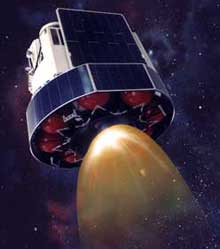
 It was the Delta K stage. It was smaller than the Centaur stage at 2.4 meters wide and 6 meters long. There is also the issue of it, likely, not having bright white sides like the Centaur. So the question of whether it would be visible at the 25 million km closest approach of ‘Oumuamua becomes even more relevant. 


The Color of ‘Oumuamua.

 The color of ‘Oumuamua has been described as red. This was taken as supportive of it being like the outer solar system objects that are also red. The inference was of it either acquiring a similar coating from long periods in the outer solar system or of it being a similar object in the outer stellar system of its origin.

 On the issue of ‘Oumuamua being uniformly red however there is some debate. At least one observational report describes it as “neutral” colored:

Col-OSSOS: Colors of the Interstellar Planetesimal 1I/'Oumuamua

Michele T. Bannister, et al.

The Astrophysical Journal LettersVolume 851Number 2

Focus on the First Interstellar Small Body `Oumuamua

The grJ colors of 1I/'Oumuamua are at the neutral end of the solar system populations (Figure 3). About 15% of the TNOs have colors consistent with 1I/'Oumuamua, all in dynamically excited populations. 1I/'Oumuamua's color is also consistent with that of the less-red Jupiter Trojans, which are P type (Emery et al. 2011), and with Bus & Binzel (2002a) and DeMeo et al. (2009) X type in the asteroids, which encompasses the Tholen (1984) E, M, and P classifications. As its albedo is unknown, we do not describe 1I/'Oumuamua as consistent with the Tholen (1984) P type.

Notably, 1I/'Oumuamua does not share the distinctly redder colors of the cold classical TNOs (Tegler et al. 2003; Pike et al. 2017), which may be on primordial orbits. Nor is its color among the red or "ultra-red" colors of the larger TNOs on orbits that cross or are well exterior to the heliopause (Sheppard 2010; Trujillo & Sheppard 2014; Bannister et al. 2017). The cause of ultra-red coloration of these TNOs is unknown, but has been attributed to long-term cosmic-ray alteration of organic-rich surfaces (Jewitt 2002), such as would be expected during the long duration of interstellar travel.

https://iopscience.iop.org/article/10.3847/2041-8213/aaa07c/meta


 Still the detected red coloration of some observations could be due to the red engine nozzle of the Delta K stage.

 Escape velocity by gravity assists from inner planets? 

 The high velocity of ‘Oumuamua, well above Solar System escape velocity, has been much remarked upon, and it is the reason why it was taken to be an interstellar object. However, the New Horizons spacecraft was able to achieve escape velocity from a gravity assist, a “gravitational slingshot”, from Jupiter. And actually a surprising fact is that a close flyby of any of the planets can result in escape velocity being achieved by a spacecraft.

 See the discussion here:

Gravitational Slingshot

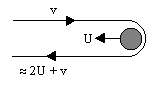
An extreme form of the maneuver would be to approach a planet head-on at a speed v while the planet is moving directly toward us at a speed U (both speeds defined relative to the "fixed" Solar frame). If we aim just right we can loop around behind the planet in an extremely eccentric hyperbolic orbit, making a virtual 180-degree turn, as illustrated below.


The net effect is almost as if we "bounced" off the front of the planet. From the planet's perspective we approached at the speed U+v, and therefore we will also recede at the speed U+v relative to the planet, but the planet is still moving at (virtually) the speed U, so we will be moving at speed 2U+v. This is just like a very small billiard ball bouncing off a very large one.

https://www.mathpages.com/home/kmath114/kmath114.htm


 You see the maximum added velocity due to the gravity assist is about twice the speed of the planets orbital velocity around the Sun. But the escape velocity at a planets distance from the Sun is square-root of 2 times its orbital velocity. So a spacecraft encountering the planet at sufficiently close distance and at the right angle could achieve escape velocity from a gravity assist.

 Then the Messenger launchers upper stage following Messenger’s trajectory, during one of the Messenger flyby’s, or even one years later, could due to small variations in the flight path be sent on an even closer encounter to the planet than Messenger and thus achieve escape velocity. 

 But if this is true how is it the simulations projecting backwards ‘Oumuamua’s trajectory show the closest approach to the inner planets millions of kilometers away not the hundreds to thousands of kilometers away needed for a gravitational slingshot? 
 
 Note that when you project back a trajectory you assume the object has not at some point flipped the direction it is traveling. But in the most extreme case that is exactly what can happen with a gravitational slingshot, as shown in the diagram above.

 This can be taken account in such trajectory simulations if you know a gravity assist did take place. That is to say, an alteration in the flight path in such a case can be taken into account, even if not necessarily to the most extreme case of reversing direction. 

 But there is a scenario where you did not know it. You see an object have a certain speed and a certain direction at a certain time, say, when it passes closest to Earth. You project backwards and note the distance at closest distance to, say, Venus is millions of kilometers away from that planet

 But IF that object at some earlier time than the time of the supposed Venus closest approach the object had a higher speed then the object could still have made a gravitational slingshot flyby of the planet with Venus being at a different location.

 Then to see if this did happen in the ‘Oumuamua case you would have to project back further then the supposed closest approaches of Venus and Mercury to see if at earlier times gravitational slingshots by these planets could have resulted in it appearing at the same location, speed, and direction as observed when it made its closest approach to Earth. The calculations are made more complicated though by the possibility of it having multiple flybys.

Detections by radio telescopes?

 The possibility that spent rocket stages can be mistaken for asteroids suggest additional observational techniques should be made when they are discovered. ‘Oumuamua was scanned to see if it was emanating radio transmissions, and none were found. But it still might have been detectable by radio telescopes or by radar. It might have been determined for example if it were more reflective than usual suggesting it was made of metal.


  Robert Clark


Sunday, February 15, 2015

Low cost Europa lander missions.

Copyright 2015 Robert Clark
  
 NASA has proposed funding for a future orbital mission to Europa. This is expected to have a billion dollar cost. A NASA-funded lander mission to Europa was expected to be too expensive. University of Arizona researcher Christopher Impey suggests doing privately funded missions to Europa:

SUNDAY, FEBRUARY 8, 2015
Let’s Send a Private Mission to Europa, Expert Says.
http://www.astrowatch.net/2015/02/lets-send-private-mission-to-europa.html

 Indeed, by following the commercial space approach an actual lander mission, not just orbital, can be mounted for costs in the range of one of NASA's lowest cost Discovery-class missions.

 Some observations by the Hubble telescope were that Europa may have plumes like Enceladus though those observations have not been confirmed. If it does, then it may be the subice ocean on Europa could be reached simply by traveling though the fissures, like on Enceladus, not requiring melting through the ice.

 For getting funding for a privately-financed mission, imagine how much interest there would be among the public if we could actually access this subsurface ocean. As a point of comparison the Mars Pathfinder missions web site caused such overloads, with 40+ million hits per day, that some mirror sites crashed or had to have access limited:

Traffic on Mars
by Chuck Toporek
Asst. Managing Editor
Web Review
However, the most interesting and little known fact about the amount of traffic to the mirror sites comes from France, where the government actually pleaded with computer users to stop accessing the two Mars Pathfinder mirrors. You see, the phone systems in France carry all of the Internet traffic in the country, so when people started visiting the mirror sites at VisuaNet and Le Centre National D'Etudes Spatiales (CNES), they tied up the phone lines and basically disabled the country.
http://mars.jpl.nasa.gov/MPF/press/webreview/index4.html

 Private companies that provided funding could be allowed to advertise on the mission web site.

Mission Delta-V requirements.
 The spacecraft first has to be sent on a trajectory towards Jupiter. This requires a delta-v of 6.3 km/s. Following a Hohmann trajectory it takes about 2.7 years to arrive at Jupiter. Aside from this Jupiter transfer delta-v, it will need to be placed into Jupiter/Europa orbit on arrival, and then sent towards a landing on Europa. According to this report this will require a delta-v in the range of 3.9 km/s:
European Cryo-Ocean Exploration Submersible (ECOES).
Preliminary Design Report. 
 We'll use a cryogenic, hydrogen-fueled stage for the injection into a trajectory towards Jupiter. And because of the long travel time, we'll use storable (hypergolic) propellants for the propulsive maneuvers at Jupiter.
Falcon 9 v.1.1 sized launcher.
 The expendable version of the Falcon 9 v1.1 has a payload to LEO of ca. 16.6 metric tons (mT). We'll use the Ariane H10-3 hydrogen-fueled upper stage for the Jupiter trajectory insertion. It has a 11.86 mT propellant mass, 1.24 mT dry mass, and 445 s Isp. Then it can carry 2.4 mT to the 6.3 km/s delta-v needed for the flight towards Jupiter:
445*9.81ln(1 + 11.86/(1.24 + 2.4)) = 6,324 m/s
 For the stage, at Jupiter we'll use the Integrated Apogee Boost Subsystem (IABS) stage.
 An artist's concept of a DSCS satellite being boosted by the IABS. Photo: U.S. Air Force
 
 This is a small kick-stage used to put geosynchronous satellites in their final orbits. It has a 1,578 kg gross mass and 275 kg dry mass, for a 1,303 kg propellant mass, and a 312 s Isp. Then this could provide a 220 kg spacecraft with the 3.92 km/s delta-v needed to land on Europa:
312*9.81ln(1 + 1303/(275 + 220)) = 3,947 m/s. 
 The Falcon 9 v.1.1 costs in the range of $56 million, the Ariane H10-3 cryogenic stage costs in the range of $12 million and the IABS stage costs in the range of $15 million, for a ca. $83 million launch cost.
 For a model of a low cost lander we might use the Mars Pathfinder mission. This weighed only 264 kg for the lander plus 10.5 kg for the rover. The development cost for the lander was less than $150 million. The development cost of  $150 million is quite low for a planetary mission. However,  privately financed it would be even less than that, perhaps as much as a factor of 10 cheaper.
  SpaceX was able to develop the Falcon 9 at a 90% (!) saving off  the development cost of a fully government-financed launcher of similar size. Planetary Resources Inc. plans to produce imaging satellites at a fraction of the usual cost.
Arkyd 100 space telescope.
 With mission costs this low we might want to produce a separate orbiter mission at Europa. As models for this we might use the small Mars orbiters Mars Odyssey and Mars Climate Orbiter.

Falcon Heavy sized launcher.

 The Falcon Heavy will allow a larger payload to be transported to the Europan surface. It is expected to be able to carry 53 metric tons to LEO. We'll use two Centaur stages together for the injection into a trajectory towards Jupiter. For the maneuvers at Jupiter, we'll use the storable propellant stage Delta K. This has a 6 mT propellant load, 0.95 mT dry mass, and 319 s Isp. Then it can provide a 1 mT spacecraft with the 3.9 km/s delta-v needed for the Europa landing:
319*9.81ln(1 + 6/(0.95 + 1)) = 4,397 m/s.
 The Centaur has several incarnations. It's propellant load is in the range of 20 mT, dry mass ca. 2 mT, and Isp ca. 451 s. Then two Centaurs together could provide the 6.3 km/s delta-v needed for the Jupiter flight carrying the 7.95 mT total mass of the Delta K stage + Europa lander:
451*9.81ln(1 + 40/(4 + 7.95)) = 6,500 m/s.
  The Falcon Heavy will cost in the range of $125 million. The Centaurs cost in the range of $30 million each and the Delta K stage costs ca. $4.35 million. Then the total launch cost will be in the range of $189.35 million.
 As a model of a 1 metric ton lander we might use the Mars Curiosity rover. This is a $1 billion mission however. The commercial space approach however should be able to produce a similar size spacecraft for a fraction of this cost.
 
   Bob Clark 
 

UPDATE, February, 20, 2015:

 The web traffic to the NASA web site for the Mars Exploration Rovers was even more extraordinary, measuring in the billions of hits:

NASA’s Web Site for 2005
By Digital Trends Staff — January 7, 2005
The U.S. National Aeronautics and Space Administration Web portal continues to drive high traffic numbers — more than 17 billion hits in 2004, report both NASA and Speedera Networks, a leading global provider of on-demand distributed application hosting and content delivery services. Speedera delivers content from the space agency’s portal to visitors seeking access to the site from around the world. Popular events on the NASA Web site, including the ongoing Mars Exploration Rover mission entering its remarkable second year, as well as upcoming major projects such as the launch and comet encounter of NASA’s Deep Impact satellite mission in 2005, are expected to drive continued high levels of traffic, according to NASA officials.
http://www.digitaltrends.com/computing/nasas-web-site-for-2005/

 It was estimated there were 142 million visits to the site during this period. So the question is how much advertising could be sold for a site this well visited?

Could Blue Origin develop a lander for Artemis III?

Copyright 2025 Robert Clark SpaceX is coming under increasing criticism for its delay in developing the Starship lunar lander: U.S. Is Losin...