Friday, June 13, 2014

The Morpheus lunar lander as a manned lander for the Moon.

 Copyright 2014 Robert Clark

 Nice article here on the Morpheus lunar lander:

Project Morpheus Concludes Successful Flight Test Campaign With Spectacular Night Launch.
By Mike Killian
http://www.americaspace.com/?p=61298&cpage=1


The project leader notes it could be scaled up to be a manned lander. Based on specifications of the lander I estimate it would need to be scaled up by a factor of three to form a descent stage while using the original sized version for the ascent stage. The delta-V from low lunar orbit to the lunar surface is 1,870 m/s each way:

Delta-V Budget.
Earth-Moon space.

http://en.wikipedia.org/wiki/Delta-v_budget#Earth.E2.80.93Moon_space

 According to the given specifications, the Isp of the Morpheus engine is 321 s and the propellant load is 2.9 mT and dry mass, 1.1 mT. So with a 2 mT lunar capsule mass, the ascent stage consisting of a single Morpheus would have delta-v of:

321*9.81ln(1 + 2.9/(1.1 + 2)) = 2,080 m/s.

 The descent stage consisting of the Morpheus scaled up three times would have a 8.7 mT propellant load and 3.3 mT dry  mass. Carrying the 4 mT of the ascent stage and the 2 mT capsule, the descent stage would have delta-v of:

 321*9.81ln(1 + 8.7/(3.3 + 4 +2)) = 2,080 m/s.

  Another nice article describes the origin of the idea of the Morpheus and its innovative, low cost approach:

A father-son chat leads to first-of-its-kind NASA spacecraft.
By Thom Patterson, CNN
updated 8:00 AM EDT, Mon May 19, 2014 |
http://www.cnn.com/2014/05/18/tech/big-idea-morpheus-lander/

 Based on a $14 million development cost for two prototypes, one scaled up by a factor of three might cost $21 million. So $28 million for both stages. Actually by the Wikipedia page on Project Morpheus, the parts to build the Morpheus version 1.5B were only $750,000. So construction of a single Morpheus was probably well less than $7 million, and the cost for one three-times scaled up one well less than $21 million.

  Instead of scaling up the Morpheus, we could also combine three of the original size to form the descent stage, with the same development cost of $21 million. This would have an advantage of a quicker time to producing a flight capable prototype. Another problem with the scaled up version of the descent stage is that based on the 12 foot height of the original version I estimate an 18 foot height of the descent stage. That would be a high climb down for the astronauts. Constructing the descent stage of three copies of the original-sized Morpheus though would allow you to connect them together on a single level so the climb down would still be 12 feet.

  In any case we see again, just as with the Masten Xeus lander, a manned lunar lander can be made for 10′s of millions of dollars rather than the $10 billion of the Altair lunar lander.

      Bob Clark 

Tuesday, May 27, 2014

Towards a low cost lander for the Moon - and Mars.

Copyright 2014 Robert Clark

 I was pleased to see Masten Space Systems' Xeus lunar lander won at least an unfunded SAA through the NASA Lunar Catalyst program:


Masten's XEUS lander. 
Credit: NASA/Masten Space Systems, Inc.

 Dave Masten and Masten Space Systems became well known among space advocates for winning the $1 million NASA Lunar Lander challenge. However, another interesting focus of his is on a Centaur-derived horizontal lander for manned landings, the Xeus lander. ULA has written articles on such a concept but Masten using a ULA donated surplus Centaur is actually working on testing one. Quite notable is that Masten believes such a lander can be developed for a few 10's of millions of dollars, orders of magnitude less than the multi-billion dollars usually estimated.If so, then this could be a low cost approach to return to the Moon.
Masten discusses this lander at about the 15 minute mark in this SpaceVidCast video:

A (mostly) commercial architecture for solar system exploration - YouTube.
>


 However, I feel the connection between such a lunar lander, which can be reusable,
and a Mars manned lander still is not properly appreciated by NASA. This point was made by Mike Raftery of Boeing et.al. in a recent FISO presentation:

 IAC-13, A5, 4-D2.8.4AN AFFORDABLE MISSION TO MARS.
"A lunar landing could also be on the path to Mars. The Moon could be used as a test bed for the surface systems and lander propulsion systems which will ultimately be needed for Mars. The delta velocity requirement for the Mars ascent vehicle is about 5000 meters/second; very close to what would be needed for a reusable lunar lander 5."
http://spirit.as.utexas.edu/~fiso/telecon/Raftery_5-14-14/extra-%20An%20Affordable%20Mission%20to%20Mars.pdf

  Then dismissal of any plans of "return to the moon" is like cutting off your nose to spite your face. And indeed once you realize this fact, natural variations on Masten's idea that have important ramifications become readily apparent. Our European ISS partners do still have an interest in manned lunar missions. Such interest would be even greater if using European components. So a natural variation on Masten's idea would be to use an ESA stage to form the horizontal lander. And such a hydrogen-fueled stage does indeed exist in the Ariane H10-3.  Moreover this is half-size to the Centaur so would result in a half-size lunar mission scale compared to that of the Centaur-based mission. 

 After running the numbers I was surprised to see such a lunar mission could be launched by a single Ariane 5, or Delta IV Heavy, plus a single man-rated medium lift launcher, Falcon 9, Atlas V, Soyuz, etc., to carry the crew to LEO. A quite key fact also is the IMLEO for a Mars mission is dependent on the size of the elements that need to be delivered to Mars. Then such a small Mars lander would result in a significant reduction in the IMLEO mass for a Mars mission. 

 All this becomes apparent once you open yourself up to the idea a lunar mission might be useful towards accomplishing a Mars mission. Or as I like to phrase it, "Free your mind, and the rest will follow."
   

  Bob Clark 

Landing sites for reusable Falcon 9 first stage test flights.

 Copyright 2014 Robert Clark

 SpaceX has said the goal is to return the reusable first stage of the Falcon 9 to the launch site. However, during the two tests of the system so far the test "landings" have been on the ocean. In order to test the full reusability of the system it would be nice to have it land on a a dry surface. For safety reasons, for these test flights you could also want this dry surface to be at sea rather than the launch site. 

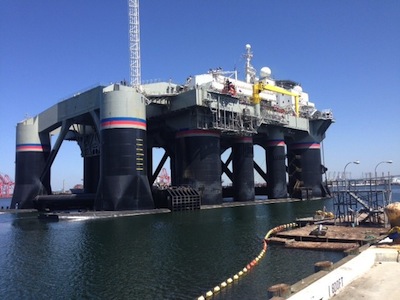
For stable landing platform for ocean landings perhaps SpaceX could rent Sea Launch's Odyssey platform:

Rocket-carrying Odyssey platform sailing to launch site.
BY STEPHEN CLARK
SPACEFLIGHT NOW
Posted: May 12, 2014

http://spaceflightnow.com/sealaunch/eutelsat3b/140512departure/#.U3n-l_ldXbg

It is based in California for sea launch from the Pacific so it would be quite a steam to bring it to Florida. Still, considering Sea Launch's current shaky financial status they would welcome some more cash from the rental.

Another possibility would be to rent one of the huge container ships for the purpose. These are typically over 100 feet wide and 1,000 feet long.


A question is how accurate are the landing zones for the F9 first stage.

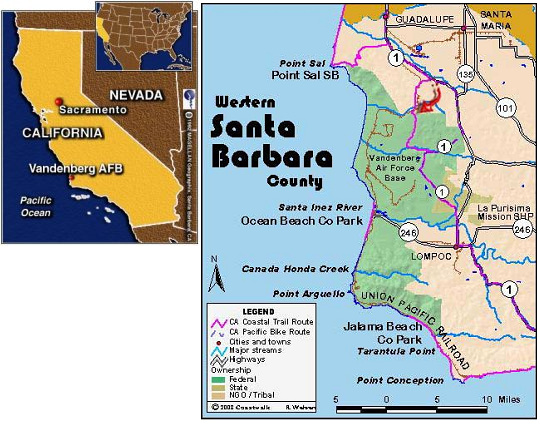
The first landing test took place in the Pacific since it launched from Vandenberg. Then you could leave the Odyssey platform off the coast of California for Vandenberg launches.

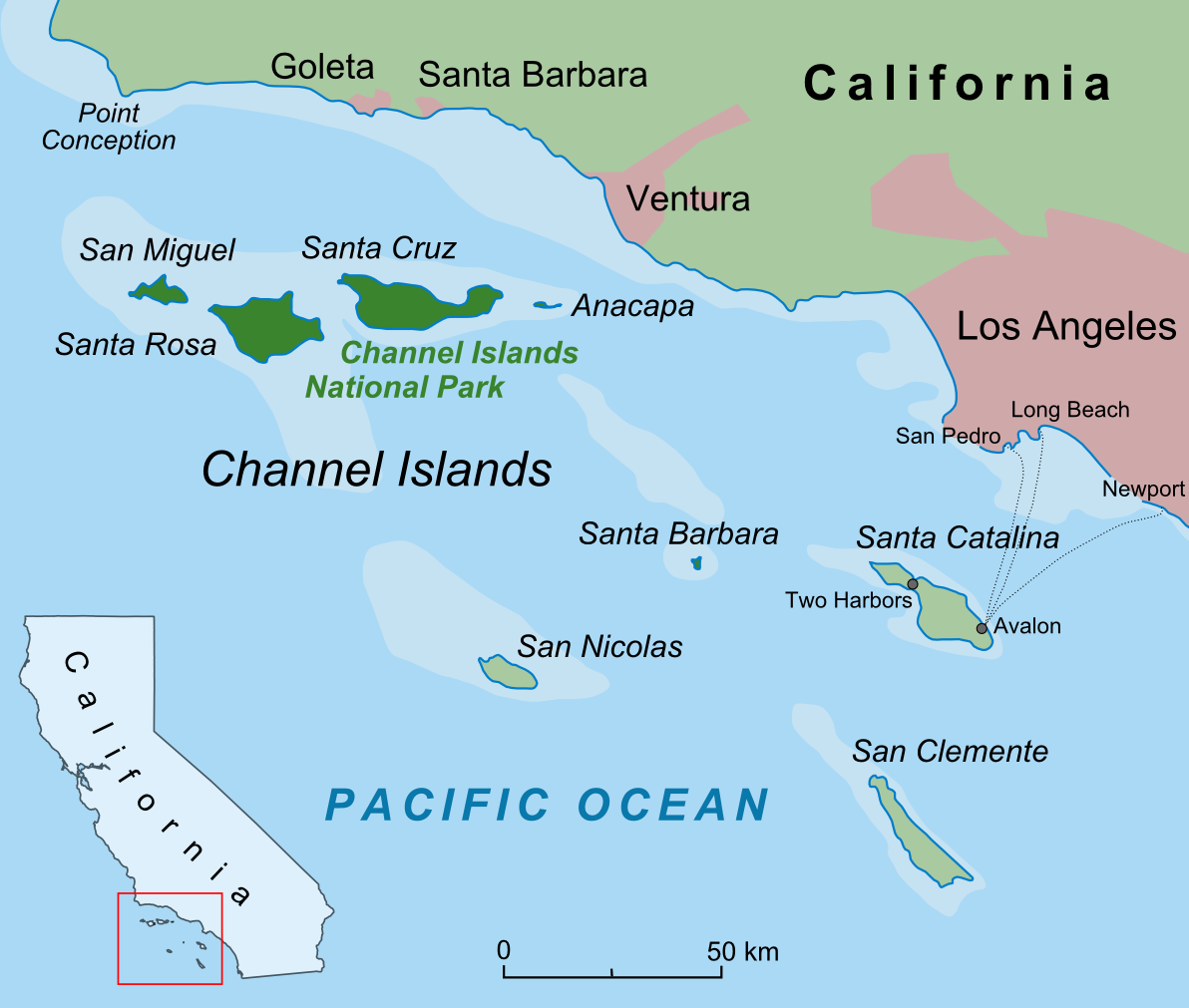
For launching from Vanderberg, another option might be landing at one of the numerous small islands off the coast of southern CA. Compare this image of Vandenberg:


with this image of small islands off the southern CA coast:


Some are sparsely populated. At least one is owned by the U.S. military.

The location of Point Conception in both images allows you to estimate the path the F9 first stage would have to take to reach one of these islands. From Vandenberg AFB though it would have to fly partially over populated civilian areas which could be a problem.

   Bob Clark

Wednesday, April 30, 2014

A contingency plan for a fast return of the U.S. to space.

Copyright 2014 Robert Clark


Why NASA and Congress Spent Four Hours Shouting At Each Other About Russia.
April 8, 2014 // 04:17 PM EST
http://motherboard.vice.com/read/why-nasa-and-congress-spent-four-hours-shouting-at-each-other-about-russia

 The congressmen kept asking for a short-term contingency plan to return America to space in case of seriously deteriorating U.S/Russia relations and Bolden kept responding with the three-year plan to have commercial crew flying. But there is a shorter term plan. BOTH SpaceX and Boeing have said they could be flying crew by next year with funding. So if the congressmen want a shorter term contingency plan, provide that required extra funding.

 At the Humans 2 Mars 2014 conference I asked Bolden about such a contingency plan. It's about at the 15 minute mark in this video:


 He responded that SpaceX has not been selected yet as the crew launch provider. OK, then also fund Boeing so they can also return crew to the ISS by 2015.

 There has been talk in Congress of only having one crew launch provider. I strongly disagree with that plan. We all saw what can happen when you only have one launch provider and that one goes down, as happened with the shuttle. SpaceX is furthest along so they should be one of the providers. But on the other hand the Boeing capsule would be carried on the Atlas V which has had a remarkable string of successful launches, which SpaceX is nowhere near to matching yet.

 Russian Deputy Prime Minister Dmitry Rogozin mocked the U.S. space sanctions against Russia saying NASA would need to get a trampoline to get its astronauts to the ISS. This led Elon Musk to state through his twitter account that SpaceX would be revealing its man-rated Dragon 2 at the end of May:


 Now, if SpaceX is flying their own crews to LEO in 2015 and there is still a strained relationship between the U.S. and Russia then, then it would be extremely embarrassing for NASA to still be paying Russia to ferry NASA astronauts to the ISS when SpaceX will already be flying American crews to LEO.

 A solution would be for NASA to at least draw up a contingency plan including cost estimates of how much extra funding it would take to also take NASA astronauts to the ISS. Then the onus would be on Congress to decide if they want to provide NASA with the extra funding to do so.

   Bob Clark

Sunday, April 20, 2014

Allan Savory: How to green the world's deserts and reverse climate change

   I found this on a climate change skeptic site but it is an important lecture whatever your opinion on that issue.
 The presenter was haunted by the decision to kill 40,000 elephants in his home country of Zimbabwe to preserve grasslands from being overgrazed. Since then he has dedicated himself to finding other ways of preventing desertification.
 He believes he has found one as he describes.

  Bob Clark


Saturday, April 19, 2014

Economical Space Solar Power Now Possible.

Copyright 2014 Robert Clark


 In the blog post, "Short travel times to Mars now possible through plasma propulsion", I suggested current solar concentrator methods and lightweight space solar sails make possible fast flights to Mars with solar powered plasma propulsion. 

 Interestingly this technology also now makes possible economical space solar power (SSP). For SSP a key detriment has been the huge weight thought needed to be sent to space. For instance solar cells typically have a 100 watt per kg weight, though more recently they are in the 200 watts per kg range. So if you wanted to get a 1 gigawatt system, about that required for a large city, you would need to send 10,000,000 kg to orbit just in solar cells alone, hugely expensive

 However solar concentrators using mirrors or lenses can now concentrate light thousands of times, requiring orders of magnitude lower weight in solar cells. Say, you had a 1,000-times solar concentrator. Then you would only need 10,000 kg in solar cells, which could be launched by a single mid-size launcher.

 BUT you would also need to send the mirrors to orbit. And that is a second key advance we have also now reached, lightweight space mirrors. The Sunjammer space mirror to test solar sail technology is scheduled to be launched January, 2015. It has a 1,200 sq. m area at only a 50 kg weight.This can collect about 1 megawatts of power. So at 1,000 times larger, it could collect 1 gigawatts of power at only 50,000 kg mass, which could be launched by a single Falcon Heavy. Another consideration though is solar cells are not 100% efficient. They are actually about 30% efficient. So you might need 3 times larger collecting area. Still only 3 launches of the Falcon Heavy. 

 Actually though some recently work on solar concentrators have also been able to use the heat created, thereby increasing the energy efficiency to 80%. So you may get close to the area size for a 100% efficient system.

 Interestingly some recent work on carbon nanotubes may be able to make the mirrors even lighter:

Researchers produce strong, transparent carbon nanotube sheets. 
Aug 18, 2005
"Strength normalized to weight is important for many applications, 
especially in space and aerospace, and this property of the nanotube 
sheets already exceeds that of the strongest steel sheets and the Mylar 
and Kapton sheets used for ultralight air vehicles and proposed for 
solar sails for space applications, according to the researchers. The 
nanotube sheets can be made so thin that a square kilometer of solar 
sail would weigh only 30 kilograms. While sheets normally have much 
lower strength than fibers or yarns, the strength of the nanotube 
sheets in the nanotube alignment direction already approaches the 
highest reported values for polymer-free nanotube yarns." 

http://www.physorg.com/news5890.html 


 This is more than 1,000 times better than the Sunjammer sail. The transparent nanotubes sheets would have to be given a thin reflective layer. But this is commonly done with telescope mirrors and add little weight to the mirror. Actually it's been found that nanotube properties are highly tunable so it may be possible to create these thin, strong nanotube sheets that are themselves reflective rather than transparent. 

 Notably, this would provide a market for getting large amounts of mass to orbit for the space solar power to be applied globally for electricity generation. Then this may finally be the "killer app" for generating a large enough market for space access to bring the costs down and thereby make space access routine.


       Bob Clark

Sunday, April 13, 2014

Sample Return Missions from Enceladus, Europa, Titan, Ceres, page 1.

Copyright 2014 Robert Clark 

 Gravity measurements from Cassini have provided further evidence that Enceladus has a subice liquid ocean. It is being regarded now as a prime target in the search for extraterrestrial life. The question is how to reach that ocean through what may be 40 km of ice. There have been various proposals for drills. However, NASA has modeled the plumes seen to arise from the "tiger stripes" on Enceladus as coming from vents that attach to the ocean below. Then a simpler method may be to reach the ocean by traveling through these vents. 


This graphic shows how the ice particles and water vapor observed spewing from geysers on Saturn's moon Enceladus may be related to liquid water beneath the surface. The large number of ice particles and the rate at which they are produced require high temperatures, close to the melting point of water. These warm temperatures indicate that there may be an internal lake of liquid water at or near the moon's south pole, where the geysers are present.

 In this model the temperatures don't have to be particularly high, just near the melting point.
 This method may work to reach subsurface liquid water for other outer solar system bodies expected to have them such as Europa, Titan and Ceres.

 As a feasibility test we might try it to explore subsurface though deep-sea hydrothermal vents here on Earth. 


 According to this model the temperatures might reach a maximum of 400 °C. If we can develop a robot to travel through these conditions quite likely it would also work in the conditions for the vent systems of these outer solar system moons.

In an upcoming blog post I'll discuss how the Falcon Heavy at a 53 metric ton(mT) payload capacity and the first version of the SLS at 70 mT could each be used to conduct sample return missions from these outer solar system moons.

     Bob Clark  


Update, April 27, 2014:

 At the Humans 2 Mars 2014 conference it was mentioned "white smokers" during an astrobiology session. These are lower temperature than the "black smokers" so might be easier to explore internally:


White smokers are seafloor hydrothermal vents that are cooler than black smokers. They deposit light-colored silica minerals as well as some sulfides.

Since they are smaller however we would need smaller robots to explore them.


UPDATE, February 9, 2015: 

 JPL is investigating robots that can explore fissures in volcanos. They are also considering how they could be used to travel to the subsurface through fissures on worlds such as Europa and Enceladus:

News | January 7, 2015
NASA Robot Plunges Into Volcano to Explore Fissure.

http://www.jpl.nasa.gov/news/news.php?feature=4431

Could Blue Origin develop a lander for Artemis III?

Copyright 2025 Robert Clark SpaceX is coming under increasing criticism for its delay in developing the Starship lunar lander: U.S. Is Losin...