Showing posts with label Early Lunar Access. Show all posts

Tuesday, January 6, 2015

NASA Technology Transfer for manned BEO spaceflight.

Copyright 2015 Robert Clark

  The Morpheus lunar lander developed by NASA demonstrates how successful NASA can be when it takes a low cost approach to developing new systems. Not only can the Morpheus be used for unmanned robotic landers, but scaled up it can produce a manned lunar lander at orders (plural) of magnitude lower cost than the $10 billion NASA previously estimated for a lunar lander. Then Project Morpheus becomes a prime example of how NASA's Technology Transfer program can be utilized.


 The orders of magnitude reduction in cost is important for enabling the low cost commercial space approach to BEO (beyond low Earth orbit) spaceflight. For this to work, first, the companies that engage in the commercial space approach have to be convinced they can make a profit on such ventures. This is much easier to do when the development costs are in the ten's of millions of dollars range rather than the billions of dollars range

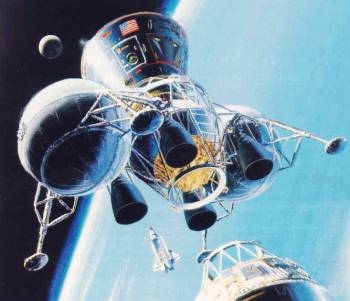
 Now note that by taking a smaller, modular approach to BEO spaceflight, as exemplified for example by the Early Lunar Access proposal, it is only a lander that would be needed to be developed for lunar flights.

Early Lunar Access. Credit: NASA

This actually is also the case for asteroidal flights since the delta-v to near Earth asteroids is actually less than that to the Moon. No hugely expensive super heavy lift launchers would be required. Only currently existing launchers, or those fully paid for by the developer such as the Falcon Heavy, would be used. Then that huge proportion of the development cost of such missions for the HLV would be eliminated.

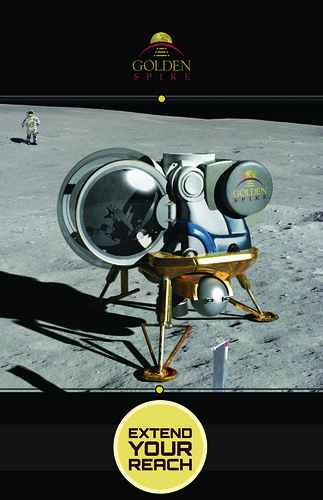
 Then at least the development costs, aside from the launch costs, can become manageable for private financing. Then private BEO proposals such as by Golden Spike Company. Planetary Resources, Inc., Deep Space Industries, etc. become feasible.


  Bob Clark

Friday, April 26, 2013

Budget Moon flights: lightweight crew capsule.

Copyright 2013 Robert Clark

 In the post Budget Moon flights, I argued that by using a capsule half-sized to the Dragon capsule at ca. 2,000 kg dry mass, that we could launch a manned lunar landing mission carried to LEO by a single Delta IV Heavy or Ariane 5 ME, with a separate man-rated launcher to carry the capsule and crew. And if using the Falcon Heavy at the stated $1,000 per pound price point it could be done at launch costs of less than $100 million.

 I'll discuss such a half-sized capsule here. This report discusses a capsule with such low dry mass:

Phoenix: A Low-Cost Commercial Approach to the Crew Exploration Vehicle
Abstract: Since the announcement of President Bush’s Vision for Space Exploration (VSE) in early 2004, the architecture of Project Constellation has been selected. The system will be centered around the Crew Exploration Vehicle (CEV), which has been dubbed by NASA administrator Michael Griffin as “Apollo on steroids”. The CEV is to be launched on a new launch vehicle, derived from existing shuttle technology. The development of this new
spacecraft and launch vehicle is a very costly proposition. An alternate approach is proposed in this study. The Phoenix is a smaller spacecraft designed specifically to be launched on the Falcon 5 vehicle under development by SpaceX. Because the SpaceX vehicle will cost only a fraction of today’s launch costs, the Phoenix is estimated to cost less than half of the price of the CEV. This reusable three person capsule utilizes an innovative re-entry concept, which allows for a cylindrical spacecraft with greater interior volume. This extremely cost-effective spacecraft is an attractive option for fulfilling VSE requirements.
 Below is page 3 from this report:

  ...
_______________________________________________________________________
_______________________________________________________________________
  ...

 Our crew capsule would not need its own propulsion system, so get the dry mass by subtracting off the masses in the "Propulsion (SPS)" section to get 2,160 kg. We will retain the RCS system though. Note the 2,160 kg dry mass actually also includes the mass for a crew of three and the mass for their space suits, as well as the food and water for a mission to and from the Moon.
 The heat shield is of the innovative "parashield" design:


This with its truss structure/drive system would amount to about 15% of the capsules dry weight. This is about the same as Apollo era heat shields. However, the lightweight PICA-X material used on the Dragon capsule can withstand lunar return velocities and would only weigh half as much. This would subtract about 160 kg from the dry mass.

 This report on a "Phoenix" capsule only envisions this crew module to carry the crew from LEO to lunar orbit and back with a separate module to be used on a lunar lander, a la the Apollo architecture. But following the Early Lunar Access architecture we could use this one single crew module for the entire flight.

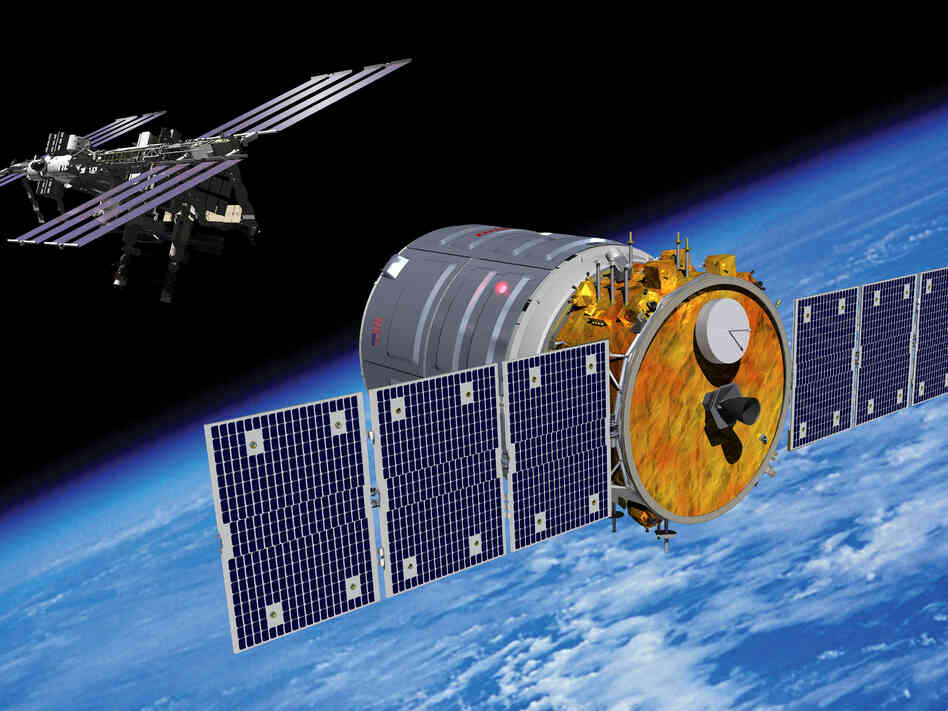
 It is notable that Orbital Sciences Cygnus capsule is of similar size to this "Phoenix" crew capsule.


Artist's rendering of Cygnus spacecraft approaching the International Space Station.

CREDIT: Orbital Sciences Corporation

 The Cygnus dry mass is 1,500 kg. This includes the propulsive service module at the base. The service module is based on Orbital's Star satellite bus. According to Astronautix this has a dry mass of about 800 kg. So the capsule itself is 700 kg. Adding on the life support elements as given in the "Phoenix" capsule report, would result in a dry mass of about 2,000 kg.
  This is important because the Cygnus is built by Thales in Italy so it means Europe could make all the components for the Moon mission, including the man-rated launch rocket as described in post The Coming SSTO's: multi-Vulcain Ariane.
 The "Phoenix" capsule report estimates billions of dollars in development cost. But this is using traditional NASA costing estimates. However, SpaceX has shown that development costs can be cut by a factor of 10 by private financing both for launchers and for crew capsules. From its half-size compared to the Dragon we might estimate its development as privately financed at half of the $300 million spent developing the Dragon, so to only $150 million.


   Bob Clark

Update, May 1, 2014:

 For the passage above highlighted in red, I am now inclined to think that 1,500 kg dry mass does not include the mass of the service module, which is, the propulsion unit at the bottom. It's because of this page:

Cygnus Spacecraft Information

Pressurized Cargo Module

Cygnus standard and Cygnus enhanced use Pressurized Cargo Modules built by Thales Alenia Space, Italy. The module is based on the Multi Purpose Logistics Module that was flown on multiple Space Shuttle Missions to deliver pressurized cargo to ISS.

It is 3.07 meters in diameter and has a length of 3.66 meters in its standard configuration and 4.86 meters with one segment added in the enhanced configuration. The standard PCM has a dry mass of 1,500 Kilograms and the enhanced version weighs 1,800kg. 2,000 Kilograms of cargo can be packed into the standard PCM while the enhanced version allows 700kg more to be loaded. The cargo module has a pressurized volume of 18.9 cubic meters in the standard configuration and 27 cubic meters in the enhanced configuration. Power consumption of the PCM is less than 850 watts.
http://www.spaceflight101.com/cygnus-spacecraft-information.html

 This page also has a separate section on the service module which suggests that mass amount above was only for the pressurized module itself.

Tuesday, March 5, 2013

Budget Moon flights.

Copyright 2013 Robert Clark 

In the blog post SpaceX Dragon spacecraft for low cost trips to the Moon, I argued that manned flights to the Moon could be mounted for costs in the few hundred million dollars range. This is compared to the $100 billion cost estimated for the now defunct Constellation program.
 The key to the low cost was using the SpaceX Falcon Heavy booster, and using already existing components, such as the Centaur upper stages. But I wondered could we bring the cost down even further using even smaller upper stages? Perhaps to even a few 10's of millions of dollars??
 I'll use again a combination of hydrogen-fueled stages, two copies of the Ariane 4 third stage, version H-10-III this time. There are variations in the cited specifications for this stage in various sources:

Ariane 4.
http://www.b14643.de/Spacerockets_1/West_Europe/Ariane/Design/Ariane_2.htm 

Die Oberstufen H-8, H-10 und ESC-A.
http://www.bernd-leitenberger.de/h-10.shtml 


Ariane-44L H10-3.
http://space.skyrocket.de/doc_lau_det/ariane-44l_h10-3.htm 

Ariane H10-3.
http://www.astronautix.com/stages/arieh103.htm

ARIANE 4 SPECIFICATIONS.
http://www.braeunig.us/space/specs/ariane.htm 

 It may be some sources are including the weight of the Vehicle Equipment Bay (VEB), others not. The VEB carried the avionics and telemetry equipment for the Ariane 4. We may suppose these functions carried out by the crew capsule, and at lighter weight than that used on the Ariane 4, first launched in the mid-90's.
 I'll use the numbers on Braeunig's "ARIANE 4 SPECIFICATIONS" page. It gives the dry mass of the stage as 1,240 kg and the propellant mass as 11,860 kg. The HM-7B engine used on that stage has an Isp of ca. 445 s.

 We'll use again this table of Earth/Moon delta-V's:

Delta-V budget.
Earth–Moon space.


https://en.m.wikipedia.org/wiki/Delta-v_budget#Earth%E2%80%93Moon_space%E2%80%94high_thrust

 With aerobraking on the return to the Earth, the total round-trip delta-V is 8,650 m/s.  We'll  use the architecture that the landing stage is used to return all the way back to Earth, not just to link up with a stage waiting in lunar orbit. And just a single crew capsule will be used that carries the crew all the way from Earth to the Moon and back again, no separate command and lunar modules, as with Apollo. This is analogous to the Early Lunar Access proposal of the early 90's.
 Then we could bring a payload of 2.4 metric tons(mT) to the Moon and back, sufficient for a half-Dragon sized capsule:

445*9.81ln(1 + 11,860/(1,240 + 13,100 + 2,400)) + 445*9.81ln(1 + 11,860/(1,240 + 2,400)) = 8,660 m/s.

 Various weight saving techniques can be used to save further weight on the stages.  The propellant tanks are made of aluminum rather than the heavier steel of the Centaurs. But they can be made lighter in the rang of 15% to 25% by using the aluminum-lithium alloy used on the later versions of the shuttle external tank (ET). Further weight saving techniques would be to use the common bulkhead and "balloon tank", i.e., pressure-stabilized, design of the Centaurs. 
 The tanks can be made even lighter by using composites, perhaps by 30% over aluminum-lithium:

The Composite Cryotank Technologies and Demonstration Project.
http://ntrs.nasa.gov/archive/nasa/casi.ntrs.nasa.gov/20120002943_2012002501.pdf

 This means composites can save as much as 50% (!) off the weight of standard aluminum. Aside from tanks, composites can be used on the structural members to save weight. Composites could be used on the thrust structure, the intertank, the payload and interstage adapters, and the tank structural support members.
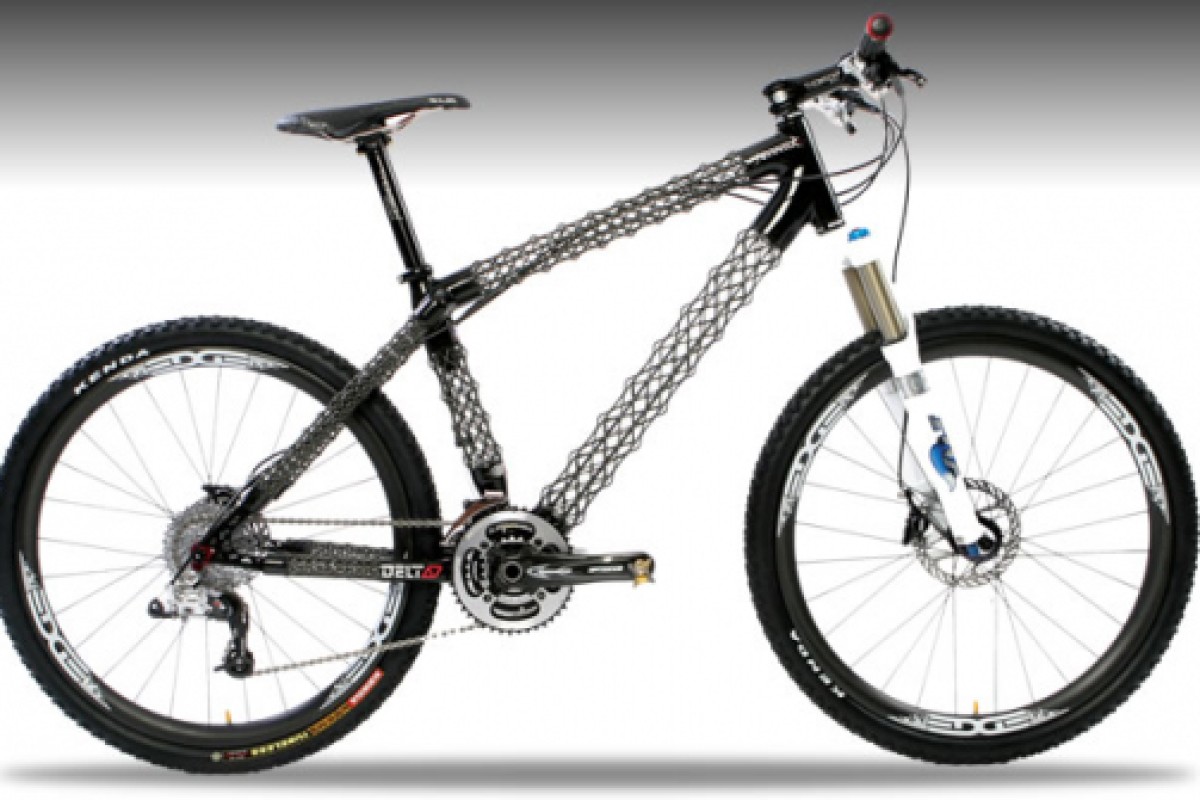
 A new composite structural technique is that of the isotruss:

Isotruss


 According to the manufacturer, it weighs only 1/12th as much as steel at the same strength:


 Boeing has already developed a 2.4 meter wide composite cryogenic tank: 

Boeing Develops Game Changing Composite Propellant Tank

 This would be sufficient for the H10-III stage. By next year they expect to have a 5.4 meter wide tank. This would allow a 20 mT standard sized Centaur to have the composite tanks. This size tank would also work for a scaled-up 40 mT Centaur-style stage. ULA has argued a stage this size following various weight saving techniques could get a 20 to 1 mass ratio. This would allow a stage that could make a manned round-trip lunar flight from LEO in a single stage.  

 ULA has discussed improving mass ratio as the best way to improve performance at the NewSpace 2012 conference. 


 From the graphs shown it is apparent propellant mass fraction, or mass ratio, is far and away the best way of increasing performance.  
Then to maximize the payload we can deliver to planetary targets, including on manned missions, it is important to implement such weight saving methods. For instance a single in-space stage for a lunar mission could be made reusable, thus cutting the cost of the in-space stage. 
 Conceivably just as important is that high mass ratio would also allow a single stage to orbit vehicle, SSTO. This has relevance to another ULA proposal of establishing propellant depots. It is known that a single stage capable of reaching LEO could also with orbital refueling make the round-trip from LEO to the lunar surface and back again as a single stage. So this one stage could make the entire trip from Earth to the Moon, with that one stop for refueling.
 The DC-X test VTVL test vehicle will be having its 20th anniversary this year. The event is to be celebrated by the participants in the program in August this year. It will also be marked by restoration of the DC-X for display in the New Mexico Space Museum.
 The DC-X itself was not intended to reach orbit. But interestingly the H-10-III stage, of similar size to the DC-X, may have this capability when lightweighted with composites. The single HM-7B engine it has though does not provide sufficient thrust for liftoff. You may need to add two to three additional engines. The increased thrust  however would add additional stress to the structure. It may require additional strengthening mass.   

COST. 
 For the lunar flight scenario, the total weight for the two H-10-III stages and the 2.4 mT capsule would be 28.4 mT. Using the estimated $2,000 per kilo cost for the Falcon Heavy launcher this would be a launch cost of $56.8 million. There is the cost also of the H-10-III stages. According to the "Ariane H10-3" Astronautix page, it's listed as $12 million. So the total cost of the launch would be $80.8 million.
 There is also however the cost of the capsule. We may suppose though the capsule is reusable so its cost per use might be only in the few million dollars range. Actually at a weight penalty of a few hundred pounds of propellant kept in reserve, which would subtract a proportionally smaller amount from the payload, the first H-100-III stage might be returnable to Earth to also be reusable. The second stage, used as the lander, could already be reusable since under the Early Lunar Access architecture it would also serve as the propulsive stage to return the capsule all the way to Earth. This would reduce the per use cost for the upper stages as well.
You would not be limited to using the Falcon Heavy, though this would be the lowest cost. The Delta IV Heavy with upgraded RS-68a engine has a 28 mT payload capacity to LEO, slightly less than the 28.4 mT needed at around a $300 million launch cost. However, the Delta IV Heavy is not expected to be man-rated anyway so you might as well launch the capsule on another rocket and link up with the propulsive stages in orbit.

ESA VERSION.
 This may be an architecture that could be implemented by the ESA. The Ariane 5 ME  is to have a 20% increase in payload to GTO to 12 mT. If the increase in payload to LEO is also 20% then that would bring the payload capacity to 24 mT. This would be enough to carry the propellant of the two H-10-III stages. Neither the current Ariane 5 nor the ME version will be man-rated however. We will need a separate man-rated rocket to carry the crew to orbit. This would have to lift the two H-10-III dry masses plus the capsule mass for 2*1.24 mT + 2.4 mT = 4.88 mT. I'll show in an accompanying blog post this is well within the capability of a vehicle made from a just a single stage of the Ariane 5 core with a second Vulcain 2 engine added. 
 The cost of the Ariane 5 is about $200 million. If the cost is also increased by 20% on the ME this would bring it to $240 million. And the cost for the manned launcher? I'm informed by a member of ESA that the estimated cost for a modified Ariane 5 core with a second Vulcain 2 engine would be ca. $60 milion. Plus the $24 million cost of the two upper stages brings the cost to $324 million.


  Bob Clark


Wednesday, December 19, 2012

"Golden Spike" circumlunar flights.

Copyright 2012 Robert Clark


"Golden Spike Co" has released a paper describing their return to the Moon plans:

An Architecture for Lunar Return Using Existing Assets.
by James R. French et. al.
http://goldenspikecompany.com/wp-content/uploads/2012/02/French-et-al.-Architecture-Paper-in-AIAA-Journal-of-Spacecraft-and-Rockets.pdf

 It gives several different architectures and types of missions. But on page 8 it gives the payload capability of the Falcon 9, presumably the new version Falcon 9 v1.1, as 16,700 kg. However, on the SpaceX site it's given as 13,100 kg:

http://www.spacex.com/falcon9.php#launch_and_placement

 Interestingly at the 16.7 mT number you can do a manned circumlunar mission on a single Falcon 9 + Dragon, even including a launch abort system(LAS), by using a half-size Centaur as the in-space stage. But at the 13.1 mt number it becomes more problematical .
 Such a mission would be very important to accomplish. Recall the Apollo 8 mission was a manned lunar flyby that served as the prelude to the Apollo 11 mission. It is regarded then as being a part of the costly Apollo program, requiring the expensive Saturn V launcher.
 The skepticism among many about the Golden Spike plan or other commercial lunar plans is the idea it would require large, highly expensive Saturn V class launchers. However, if the manned flyby could be done by a single launch by what is still just a medium size launcher in the Falcon 9 v1.1 it would show that by going small and following a low cost, commercial approach, that a low cost return to the Moon is feasible.
 The Falcon 9 v1.1 will cost in the $60 million range, and we might estimate the half-size Centaur to be in the $15  million range. So the launch cost for such a mission might be in the $75 million range.
 As I discussed before in regards to using the first test flights of the Falcon Heavy for unmanned BEO test flights, the test flights of the Falcon 9 v1.1 could serve for unmanned test flights for this lunar flyby. Since SpaceX needs to do such tests anyway most of the cost of the Falcon 9 and Dragon capsule would be borne by SpaceX. Then you could have Golden Spike only paying ca. $15 million for the half-size Centaur.
 There would be some development cost of course beyond that for this half-size Centaur. For one thing you would have to make the cryogenic propulsion undergo less boiloff for 1 to 2 week missions. ULA has done studies on this so should be doable but still it has to be carried out in practice. An advantage of this would be that this half-size Centaur is about the size you need for the lander. So the lander could be derived from this, and the development cost for the two stages could be reduced.

CALCULATIONS
 The Golden Spike landing plan specifies using two Falcon Heavy's even though it uses a Dragon sized capsule. This is more than 100 mT to LEO. This is puzzling since the advantage of using a lightweight capsule is that it should require smaller amounts to be launched to orbit, known as IMLEO, initial mass to low Earth orbit. For instance the Early Lunar Access plan only requires 52 mT to orbit using a small two-man capsule. However, I believe the Golden Spike paper by French et. al. explains where the discrepancy arises.
 On page 13 is given a table of some masses for different possible propulsive stages. The mass for the Dragon with trunk and crew and supplies is 8,853 kg, well above the given dry mass of the Dragon capsule at 4,200 kg. The trunk section is less than 1,000 kg and the propellant for the Dragon is at 1,290 mT. The mass for crew and supplies in the Golden Spike paper is given as 300 kg. Evidently then the extra mass to get to a 8,853 kg mass is coming from the launch abort system (LAS).
 In any case a 8,853 kg mass would be at the mass of the Orion capsule and we would lose any advantage of a lightweight architecture. Then I suggest an alternative to the SpaceX LAS that has the LAS permanently integrated into the capsule.
 We could use again a tower type LAS that would be jettisoned prior to reaching orbit. To estimate its mass we might make a comparison to the Orion LAS. The Orion LAS is at 6,000 kg. The Dragon is at half the mass of the Orion capsule. Then we can estimate the mass for a tower type LAS for the Dragon as 3,000 kg.
 This is also a high additional mass. However, typically a tower LAS is jettisoned soon after first stage separation. So we can estimate how much this will subtract from the payload to orbit by making a comparison to how much the payload is reduced for an increased dry mass to the first stage. A rule of thumb is that every kilo of mass added to the first stage dry mass subtracts off 1/10 of a kilo from the payload. So we can estimate 300 kg being subtracted off the payload.
 Now we'll estimate the size of a cryogenic stage needed to take the Dragon to a circumlunar mission. In the table on page 13 in the Golden Spike paper is given a cryogenic, LH2/LOX, stage at 1,196 kg dry mass and 7,534 kg propellant mass. This is a mass ratio of 7.3 to 1. Notably this is less than that of current Centaur upper stages at about 10 to 1. This is because mass ratio improves as you scale up your rocket stages.
 This rocket stage would be sufficient to carry the Dragon's 4,200 kg dry mass plus the 300 kg for crew and supplies using RL-10 engines. The delta-v for trans lunar injection(TLI) is 3,150 m/s. Using a 451 s Isp for the RL-10 engines we get a delta-v of:

451*9.81ln(1 + 7534/(1196 + 4500)) = 3,700 m/s.

 But because of the loss of payload capacity due to the LAS from  SpaceX's cited payload to LEO of the Falcon 9 v1.1 of 13.1 mT, this would be slightly more mass than can be carried to LEO. So we'll use a slightly smaller stage. Let the propellant mass be 7,000 kg. Keeping the same 7.3 mass ratio, this corresponds to a dry mass of 1,100. Then the delta-v will be:

451*9.81ln(1 + 7000/(1100+ 4500)) = 3,600  m/s, still sufficient for the TLI.


  Bob Clark
Saturday, December 1, 2012

SpaceX Dragon spacecraft for low cost trips to the Moon, page 3: Falcon Heavy for BEO test flights.

Copyright 2012 Robert Clark

The Falcon Heavy is planned to be tested by SpaceX by 2014. By using the Early Lunar Access (ELA) architecture we could have a return to the Moon by 2019, using either the Falcon Heavy or the SLS, as described in the blog post "SLS for Return to the Moon by the 50th Anniversary of Apollo 11". Note this would also be by the 2020 timetable set by the Vision for Space Exploration(VSE).
 This ELA architecture could be implemented either using either the Dragon capsule or the NASA Space Exploration Vehicle (SEV). The SEV is intended to be used for BEO missions perhaps for mission durations up to 28 days long with two crew members. Then the first Falcon Heavy missions would provide means for testing unmanned the SEV for BEO missions to the lunar surface, the Lagrange points or to near Earth asteroids.
 SpaceX needs to perform the test flights for the Falcon Heavy so they would pay for the costs of the launch themselves. For the lunar flights as discussed in the "SpaceX Dragon spacecraft for low cost trips to the Moon" post, the two Centaur-like upper stages might require in the range of $30 million dollars each. There would be an extra cost for the SEV but for these first test missions we might only use the prototype test vehicles now undergoing field tests with NASA's Desert RATS program. These prototype vehicles only cost in the few hundred thousand dollar range. This would put the cost to NASA in the low cost Discovery-class mission range.

2011 Desert RATS Overview
 Since these are to be unmanned test flights, ideal would be to "man" them with two Robonauts. This would dovetail nicely with the Johnson Space Center's Project Morpheus plan to send Robonaut to the lunar surface.  In regards to NEO missions, this is one of the planned uses for the SEV. For the manned asteroid flights NASA was considering, the mission time ranges were above 90 days. That would be unrealistic for flights just using the SEV alone. However looking at the Near-Earth Object Human Space Flight Accessible Targets Study (NHATS) page there are NEO missions with duration times of 34 days or less at stay times of greater than 8 days that could correspond to under 28 day mission times if we limit the stay time to a day or so.


      Bob Clark

Monday, October 29, 2012

SLS for Return to the Moon by the 50th Anniversary of Apollo 11.

Copyright 2012 Robert Clark


Very interesting report about using NASA's proposed Space Exploration Vehicle for cislunar space exploration:

Lunar Surface Access from Earth-Moon L2.
A novel lander design and study of alternative solutions.
1 October 2012 | Washington, DC
http://www.sei.aero/eng/papers/uploads/archive/SEV-L2-Lander-Presentation_1Oct2012.pdf

 The report proposes using the lightweight SEV, at only a 3 mT empty weight, and all cryogenic propulsion as a shuttle between the L2 space station NASA has recently discussed and the lunar surface. However it could also be used as the crew capsule between LEO and the Moon's surface.
 The architecture discussed is very interesting in that the SEV would be used as the single crew module to carry the crew all the way from the L2 station to the lunar surface and back again, i.e., no separate lander crew module. There would also only be a single propulsive stage to carry the SEV from low lunar orbit to the lunar surface and back to lunar orbit, i.e., no separate lunar descent and ascent stages.
 This has similarities to the architecture for the Early Lunar Access(ELA)[1] proposal of the early 90's. This also used all cryogenic space stages to save weight, only 52 mT required to LEO. ELA also saved weight and cost by using a single crew capsule for the entire flight from LEO to the lunar surface and back again. It also used a single propulsive stage for lunar descent and ascent. But instead of linking up with a stage waiting in lunar orbit for the return, the ELA proposal was to have this single lander stage return all the way back to LEO.
 An alternative architecture discussed on page 23 in this report on using the SEV for cislunar travel does not use the method of first stopping in lunar orbit, then having a separate lunar lander stage. Instead it uses the "direct descent" method of descending directly to the lunar surface. This landing method is analogous to that used in the ELA proposal to save propellant. Interestingly the SEV report on page 23 gives the delta-V for the direct descent method as 2,610 m/s. This compares to the 760 m/s + 2,150 m/s = 2,950 m/s for the method that first stops in lunar orbit, then descends to the surface as indicated in the image above. So according to this report a savings of 300 m/s in delta-V for the trip from L2 to the Moon is possible using direct descent, a significant savings.
 I had wondered if it was possible to save delta-V and propellant in this blog post 'Delta-V for "direct descent" to the lunar surface?'[2]. The SEV report suggests it may be possible to save in the range of 300 m/s by the direct descent method.
 The only technical complaint raised against the feasibility of the ELA proposal back in the 90's was the suggestion of getting a 2-man crew capsule at only a 3 mT empty weight. So the fact the SEV is expected to have this low an empty weight is important, since it suggests the possibility with just the 70 mT first version of the SLS of a manned lunar lander mission using currently existing cryogenic stages.
 Actually the 70 mT payload of the SLS is so much better than the 52 mT needed for ELA that likely we could even use a heavier hypergolic stage for the lunar ascent stage. During the early planning of the Apollo program when the possibility an engine might not ignite was regarded as a definite possibility, it was decided to use hypergolics, which ignite on contact, for the lunar ascent stage. At this point though the cryogenic RL10 engines have had decades of use and are regarded as highly reliable.
 Still for these first versions of these new lunar landers we might still want the certainty of using hypergolics for the ascent stage. I suggest using the engine and propellant tanks of the shuttle orbiter OMS pods for the purpose. This would be quite appropriate actually since the OMS pod engines were derived from the Apollo lunar lander engines. By the Astronautix page on the OMS pods[3], they are each about 10 mT propellant mass and 1.8 mT dry mass. Then using its 316s Isp, one of them would suffice for the ca. 2,740 m/s delta-V to go from lunar surface to LEO even with a 4 mT crewed and supplied mass for the SEV with plenty of margin: 316*9.81ln(1 + 10/(1.8 + 4)) =  3,100 m/s.
 The first version of the SLS, called Block 1, is expected to launch by 2017. I would expect a test lunar lander mission, especially if using all cryogenic in-space propulsion, to be done first before a crewed mission is sent. But certainly by 2019, the 50th anniversary of Apollo 11, a crewed mission could be sent. This is in contrast to a post-2030 proposed time frame for a crewed lunar landing using the full 130 mT version of the SLS when it first becomes available.
 There is the cost issue of mounting a manned lander mission. Oddly, the high cost of the SLS might be helpful in this regard. The cryogenic Centaur-like upper stages are already available at a cost in the range of $30 million [4], so the modifications there would be comparatively low cost, compared to the already high cost of the SLS. As for the development cost of the SEV, I suggest use of NASA's commercial crew program's financing procedures. SpaceX was able to develop the Dragon as largely privately financed for reportedly $300 million. And Boeing is paying much of the cost of the development of the CST-100 capsule. It is highly dubious they would be spending a billion dollars of their own money for its development. Then likely its total development cost is in the few hundred million dollar range. Therefore it is likely the development cost of the smaller SEV under commercial crew procedures would also be in the few hundred million dollars range, again comparatively low cost compared to the SLS.
 As I discussed in the blog post "SpaceX Dragon spacecraft for low cost trips to the Moon", SpaceX will also be able to mount a manned lunar landing mission using the 53 mT Falcon Heavy by following, it turns out, the ELA architecture. This will be much cheaper than using the SLS launcher, perhaps only in the few hundred million dollars range cost. But you would have to get private financing for that, since NASA would not fund it as it would undercut NASA's own program.
 In contrast, NASA using the SLS in such an early time frame for a manned return to the Moon would provide further support for continuing the SLS funding. No longer would the SLS be referred to as "a rocket to nowhere".


  Bob Clark

Update, Sept. 28, 2013:

 Finally, NASA has acknowledged that the Block 1, first version of the SLS to launch in 2017 will have a 90+ mT payload capacity not the 70 mT always stated by NASA:

SLS Dual Use Upper Stage (DUUS).
http://ntrs.nasa.gov/archive/nasa/casi.ntrs.nasa.gov/20130013953_2013013757.pdf

 This is important since it means we will have the capability to do manned lunar landing missions by the 2017 first launch of the SLS:

SLS for Return to the Moon by the 50th Anniversary of Apollo 11, page 5: A 90+ metric ton first launch of the SLS.
http://exoscientist.blogspot.com/2013/09/sls-for-return-to-moon-by-50th.html

REFERENCES.

1.)Lunar Base Studies in the 1990s. 
1993:  Early Lunar Access (ELA). 
by Marcus Lindroos 
http://www.nss.org/settlement/moon/ELA.html 
(Note a typo on this page: the payload adapter mass should 
be 2,000 kg instead of 6,000 kg.) 

2.)Delta-V for "direct descent" to the lunar surface?
SATURDAY, SEPTEMBER 15, 2012
http://exoscientist.blogspot.com/2012/09/delta-v-for-direct-descent-to-lunar.html 

3.)Encyclopedia Astronautica.
Shuttle Orbiter OMS.
http://www.astronautix.com/stages/shueroms.htm

4.)Encyclopedia Astronautica.
Centaur IIA.
http://www.astronautix.com/craft/cenuriia.htm

Wednesday, October 24, 2012

SpaceX Dragon spacecraft for low cost trips to the Moon, page 2: Comparison to 'Early Lunar Access'.

 Copyright 2012 Robert Clark

 Early Lunar Access lander stage.


 The Early Lunar Access [1],[2], proposal of General Dynamics came as quite a surprise to those in the industry when it was first proposed in the early 90's. It suggested manned lunar missions at half the mass needed to LEO and at 1/10th the cost of the Apollo missions.
 It was based on using existing launchers with small upgrades to keep costs low. The only part of it that was technically doubtful at the time was that you could get the lightweight 2-man capsule they were proposing at only a ca. 3.7 mT crewed mass.
 Based on such a small sized capsule, they were able to get a manned mission to the Moon at only about 52 mT required to LEO using all cryogenic space stages. However, the 7-man Dragon capsule at a ca. 4mT dry mass suggests this is indeed feasible.
 It is also interesting the architecture they were proposing for low costs was similar to what I suggested for the SpaceX Dragon via the Falcon Heavy launcher. It would use a single capsule to take the crew all the way from LEO to the Moon's surface and back again, i.e.,no separate lunar crew module. Also it would use as I suggested a single lander stage to take the crew capsule from low lunar orbit to the Moon's surface and then all the way back to LEO, rather than linking up with a return stage waiting in lunar orbit for the return.
 This gives further confidence in the feasibility of the lunar lander plan using the Dragon with Centaur-style stages launched on the 53 mT Falcon Heavy.


  Bob Clark

1.)Encyclopedia Astronautica
Early Lunar Access.

2.)Lunar Base Studies in the 1990s.
1993:  Early Lunar Access (ELA).
by Marcus Lindroos
(a typo on this page: the payload adapter mass should
be 2,000 kg instead of 6,000.)


Could Blue Origin develop a lander for Artemis III?

Copyright 2025 Robert Clark SpaceX is coming under increasing criticism for its delay in developing the Starship lunar lander: U.S. Is Losin...