Showing posts with label Ariane H10-3. Show all posts

Thursday, June 7, 2018

Half-size Ariane core stage for a reusable launcher.

Copyright 2018 Robert Clark

 Long-time space advocates will recall back in the late 90's there was a push for large numbers of communication satellites for the purposes of cell-phone communication. This led to the creation of several private launch companies then to serve what was expected to be hundreds to thousands of required launches.

 However, it turned out the great majority of cell-phone communications could be served by terrestrial cell towers. The large satellite constellation plans were then abandoned, and those private launch companies then collapsed.

 But now once again there are renewed plans for satellite megaconstellations containing hundreds to thousands of satellites, such as OneWeb or SpaceX's StarLink. This time it is primarily for high speed internet service. This time there is billion dollar backing for the projects and there have been preliminary launches to test the idea.

 It's very likely now that the projects will take place. For space advocates, an important result of the large numbers of launches required is that it provides a clear advantage for low cost reusable launchers.

 SpaceX always believed reusable launchers could be financially feasible. But other space launch providers were skeptical. They didn't think the number of launches under the current market would pay for reusability.

 But now with the advent of the new megaconstellation plans even previously skeptical Arianespace plans to transition to reusability. See for example the articles here:


 One project Arianspace is planning is called Callisto. It is to be a small sized hydrolox test vehicle to test reusable, vertical landing boosters. It is to be analogous to the SpaceX Grasshopper tests.

 However, unlike the SpaceX Grasshopper that used the original Merlin engines and the same F9 propellant tanks, though perhaps only partially filled, the Callisto plan is to use an entirely newly designed and built stage.

 I see a problem with this. For the money spent on Callisto, it will not be an actual operational vehicle. This mirrors a problem with the X-33 test vehicle that was supposed to test the technologies for an operational SSTO vehicle. But for all the money spent on the X-33, it itself would not have been an operational vehicle.

 I believe this was a mistake. It would have been better if the X-33 itself was to be used as an operational vehicle. It could have been used as a reusable first stage booster to cut costs for a two-stage to orbit system, a la the SpaceX plan:

DARPA's Spaceplane: an X-33 version.

 Then my recommendation is not to repeat the mistake of the X-33 program by instead actually using operational stages to test reusability and vertical landing.

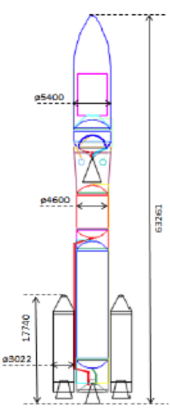
 This could be done with two existing Arianespace stages. The Ariane 5 core stage and the Ariane H10-3 cryogenic upper stage. In both cases you would use partially filled tanks, approx. half-filled so that the stage could lift-off on their single engines.

 For the operational versions, you would make the tanks themselves half-size, instead of half-filling a full-sized tank, to save dry mass, at least for the Ariane 5 core. For the Ariane H10-3 for the upper stage use it might be able to carry its full propellant load dependent on the propellant load on the Ariane 5 core to be able to lift off on its single Vulcain engine.

 Another advantage of this approach is that it would finally provide Europe with an independent manned spaceflight capability.

 There is a key problem that would need to be solved. Discussion on on a space forum was that the Vulcain II is not throttleable. The HM7-B engine used on the Ariane H10-3 upper stage is also not throttleable. Then both engines would need to be upgraded to be throttleable. As support for the idea this should be feasible, it should be noted the original versions of the SpaceX Merlin engines prior to the Merlin 1D were not throttleable. SpaceX has also shown with its "hoverslam" approach to vertical landing, it would not have to have a high degree of throttleability. Probably the degree of throttleability common to liquid fuel engines in the range of 60% would be sufficient.
See discussion here:

A half-size Ariane for manned spaceflight.

 Bob Clark

UPDATE: 6/10/2018

 In the discussion above I forgot a key point. The most important factor in
regards to cost is not the development cost.
The key cost factor is what they would charge per flight for a reusable
launcher. Robert Zubrin made this point insightfully in one of his books. He
recounts that he made the argument for reusable launchers in his former job
with one of the big launch companies.

 He argued that they could cut the cost of launch by an order of magnitude.
The company execs responded: why would we do that? Their view was their
revenue would then be slashed by a factor of ten. They were assuming the
market would still be the same but they would be getting one-tenth the
revenue.

 So the OldSpace companies were acting quite rationally in a business sense
in discounting reusability. They were saying the market was not enough to
make it advantageous to them.

 But if there were a large market then they would make more money making more launchers at the lower price. That is, the price would be reduced by a factor of ten but the number of launches would be increased by more than a factor of ten.

 Also, the importance of the large market and lowered prices for satellite
launches extends beyond that of just the satellite market. By making
launches at such reduced prices, that increases the possible market for
passenger flights to space. So the impending megaconstellation launches may
also bring to fruition the long desired routine passenger flights to space.


Sunday, January 24, 2016

New Shepard as a booster for an orbital launcher.

Copyright 2016 Robert Clark


 Blue Origin scored another first by successfully relaunching their vertical landing New Shepard suborbital rocket:


 In the blog post "Triple Cored New Shepard as an orbital vehicle", I suggested using three cores of the New Shepard rocket with a small upper stage could form an orbital launcher. However Jonathan Goff on his blog page SelenianBoondocks raised the possibility a single New Shepard could serve as the first stage booster of an orbital rocket:

Random Thoughts: New Shepard for Pop-Up TSTO NanoSat Launch.
http://selenianboondocks.com/2016/01/random-thoughts-new-shepard-for-pop-up-tsto-nanosat-launch/

  I think it should be doable using a similar small cryogenic upper stage as for the triple-cored case. The stage I suggested there was the cryogenic upper stage of the Ariane 4, the Ariane H10-3, or one developed by Blue Origin similar to it. It had a dry mass of 1,240 kg and a propellant mass of 11,860 kg. The Isp was 445 s with a vacuum thrust of 64.8 kN. However, simply using a nozzle extension as on the RL-10B-2 can give it likewise an Isp of 462 s and vacuum thrust of 110 kN. So we'll use these values.

 To make the estimate of the payload we need the vacuum values for the Isp and thrust of the BE-3 engine. In the "Triple Cored New Shepard as an orbital vehicle" blog post I estimated these to be 360 s and 568.8 kN respectively.

 However, to loft the vehicle with the additional weight of the upper stage we'll need to increase the BE-3 thrust slightly. This should doable. For instance the SSME’s could operate at 109% of their originally rated thrust, and the Merlin 1D had a 15% thrust upgrade. So say the BE-3 vacuum thrust is increased 9% to 620 kN, keeping the same Isp.

 Now use Dr. John Schilling's payload estimator program. For the "Restartable upper stage" option check "No", otherwise the payload will be reduced. Select Cape Canaveral as the launch site and enter 28.5 for the launch inclination in degrees to match the latitude of the launch site. Then the calculator gives the result:

Mission Performance:
Launch Vehicle:  User-Defined Launch Vehicle
Launch Site:  Cape Canaveral / KSC
Destination Orbit:  185 x 185 km, 28 deg
Estimated Payload:  1690 kg
95% Confidence Interval:  1298 - 2153 kg

"Payload" refers to complete payload system weight, including any necessary payload attachment fittings or multiple payload adapters

This is an estimate based on the best publicly-available engineering and performance data, and should not be used for detailed mission planning. Operational constraints may reduce performance or preclude this mission.


 Altitude Compensation to Increase Payload.
  As I discussed in the "Triple Cored New Shepard as an orbital vehicle" blog post, altitude compensation provides a simple, low cost method of improving payload.  For instance by attaching a nozzle extension the vacuum Isp of the BE-3 can be increased to the 462 s range of the RL-10B-2 engine. The vacuum thrust will then be increased proportionally to (462/360)*620 = 796 kN.

 Then the Schilling calculator gives the result:

Mission Performance:
Launch Vehicle:  User-Defined Launch Vehicle
Launch Site:  Cape Canaveral / KSC
Destination Orbit:  185 x 185 km, 28 deg
Estimated Payload:  2324 kg
95% Confidence Interval:  1841 - 2895 kg

"Payload" refers to complete payload system weight, including any necessary payload attachment fittings or multiple payload adapters

This is an estimate based on the best publicly-available engineering and performance data, and should not be used for detailed mission planning. Operational constraints may reduce performance or preclude this mission.


  Bob Clark

UPDATE, Feb. 28, 2016:

 This considered an Ariane hydrolox upper stage as the upper stage for this New Shepard launcher. This would be problematical since it would be a direct competitor to Arianespace's Vega rocket at a much lower cost than the Vega's $35 million.

 Blue Origin very likely could develop a hydrolox upper stage that would be cheaper than the Ariane one. But that would take time and significant development cost. Instead of that, Blue Origin could produce a New Shepard derived launcher for cubesats at minimal extra development cost since the required small upper stages already exist.

 Existing upper stages that could work would be the large Star solid rocket upper stages such as the Star 63F:

Star 63F:
http://www.astronautix.com/engines/star63f.htm

 Using this for the upper stage, Schillings launch performance calculator gives:

Mission Performance:
Launch Vehicle:  User-Defined Launch Vehicle
Launch Site:  Cape Canaveral / KSC
Destination Orbit:  185 x 185 km, 28 deg
Estimated Payload:  293 kg
95% Confidence Interval:  174 - 443 kg

 This is in the range being considered for the cubesat launchers that NASA has already awarded million dollar contracts to:

Firefly, Rocket Lab and Virgin Galactic Win CubeSat Launch Contracts from NASA.
By Caleb Henry | October 15, 2015 | Feature, Government, Launch, North America, Regional, Satellite TODAY News Feed
http://www.satellitetoday.com/launch/2015/10/15/firefly-rocket-lab-and-virgin-galactic-win-cubesat-launch-contracts-from-nasa/

 Considering the quoted prices there, this New Shepard based launcher very likely could beat these prices especially using the reusable New Shepard.

 And since the upper stage already exists, it very likely would also beat to launch these other systems still in development.

 About the quick route to operational status of this orbital rocket, I think it is significant that Blue Origin was able to beat SpaceX on a relaunch of its returned booster. The argument has been made that New Shepard is not an orbital launcher. But if Blue Origin developed this orbital launcher from New Shepard then they would be able to beat SpaceX at reusing a booster for a true orbital launcher as well.

 My opinion is SpaceX will have difficulty with getting their booster to land in reliable fashion as long as it does not have hovering ability. And because the New Shepard does have hovering ability it will be more reliable as a reusable booster.

 BTW, as Blue Origin develops its large high performance dense propellant engines, it will have the same problem as SpaceX it getting its booster to be able to hover, resulting in the same problem of reduced reliability on landing. For this reason I think Blue Origin should investigate methods of giving its large planned boosters hovering ability such as discussed here:

Hovering capability for the reusable Falcon 9, page 3: hovering ability can increase the payload of a RLV.
http://exoscientist.blogspot.com/2015/12/hovering-capability-for-reusable-falcon.html

 Surprisingly, it turns out that hovering ability when properly implemented can actually improve the the payload for a reusable rocket.

Tuesday, January 5, 2016

Triple Cored New Shepard as an orbital vehicle.

Copyright 2016 Robert Clark


 Blue Origin made a significant achievement in successfully landing their New Shepard rocket after a suborbital spaceflight:


 As their next development Blue Origin intends to make a several million pound thrust rocket capable of sending 25 metric tons to LEO. This would be a very large and expensive development for their first orbital rocket, comparable in size to the largest orbital rockets available now, larger for example than the Falcon 9.

 I suggest an intermediate development for their first orbital rocket. Running the numbers, their New Shepard suborbital rocket could be used to make an orbital rocket using three cores with a smaller upper stage, a la the Delta IV Heavy.

 It would have a payload to LEO in the range of 3,000 kg, about the size of the Arianespace Vega rocket. The Vega costs in the range of $35 million. Considering the small size of the New Shepard, even at three cores, Blue Origin should be able to beat this price.

 Moreover, this version would have the capability to be reusable. SpaceX is planning to make the three cores of the Falcon Heavy reusable by returning the two side cores to the launch site and recovering the central core by a barge landing out at sea. Quite likely this would work for a 3-cored New Shepard launcher as well.

Specifications of the New Shepard BE-3 engine.


 Here's a formula for calculating the sea level thrust from the vacuum thrust and back pressure:


F = q × Ve + (Pe - Pa) × Ae
where F = Thrust
q = Propellant mass flow rate
Ve = Velocity of exhaust gases
Pe = Pressure at nozzle exit
Pa = Ambient pressure
Ae = Area of nozzle exit
http://www.braeunig.us/space/sup1.htm

 Estimating the nozzle exit diameter as 1 meter, the exit plane area would be: π*0.5^2 = .7854. Then the back pressure to be subtracted off would be 101,000Pa*.7854 = 79,325 N. 
Blue Origin has given the sea level thrust as 110,000 lb, 110,000*4.45 = 489,500 N. So the vacuum thrust is 489,500N + 79,325N = 568,825 N. 

 We also need to calculate the Isp. One other piece of information will allow us to calculate this. This Blue Origin page gives the horsepower of the BE-3 as over 1,000,000 hp:

https://www.blueorigin.com/technology

 The power of a jet or rocket engine is (1/2)*(thrust)*(exhaust velocity). The 1,000,000 hp at sea level is 1,000,000*746 = 746,000,000 watts. Then using the formula the exhaust velocity at sea level is 3,048 m/s, and the Isp is 310 s.

 Since (thrust) = (exhaust velocity)*(propellant flow rate), we also get the propellant flow rate as 489,500/3,048 = 160.6 kg/s. Now we can get the exhaust velocity and Isp at vacuum. From the 568,825 N vacuum thrust, we get the vacuum exhaust velocity as 568,825 N/160.6 = 3,540 m/s, and the vacuum Isp as 360 s.


  It is interesting that the diameter and sea level and vacuum Isp's are close to those of the RL-10A5,  the sea level version of the RL-10 used on the DC-X:

http://www.astronautix.com/engines/rl10a5.htm


Size Specifications for the New Shepard.
 The Blue Origin environmental impact statement:

Final Supplemental Environmental Assessment for the Blue Origin West Texas Launch Site.
February 2014
https://www.faa.gov/about/office_org/headquarters_offices/ast/media/Blue_Origin_Supplemental_EA_and_FONSI.pdf

on p. 4 lists the max dry mass as 30,000 pounds (13,600 kg) and max propellant load as 60,000 pounds (27,300 kg). This corresponds to estimates made of the New Shepard gross mass based on its dimensions.


 We need also a small upper stage. The cryogenic upper stage of the Ariane 4 will suit the purpose, the Ariane H10-3. It had a dry mass of 1,240 kg and a propellant mass of 11,860 kg. The Isp was 445 s with a vacuum thrust of 64.8 kN. However, simply using a nozzle extension as on the RL-10B-2 can give it likewise an Isp of 462 s and vacuum thrust of 110 kN. So we'll use these values.

 Use now Dr. John Schilling's Launch Performance Calculator to estimate the payload. We'll also use cross-feed fueling to increase the payload. Cross-feed fueling is not an unknown technology having been used on jet aircraft such as the Concorde for decades and also on the Space Shuttle's OMS engines.


 To emulate cross-feed fueling with the Schilling calculator for two side boosters, enter in 2/3rds of the actual propellant load into the propellant field for the side boosters. And for the central core enter in (1 + 2/3) times the propellant load in the field for the first stage. (See  discussion here for explanation of how the Schilling calculator emulates cross-feed fueling.)


 So in the dry mass fields for the side boosters and first stage enter 13,600 kg. And in the propellant field for the side boosters enter 18,200 kg and 45,500 kg for the first stage. For the second stage enter 11,860 kg for the propellant and 1,240 kg for the dry mass.


 In the thrust fields and Isp fields enter in the vacuum values. So for the side boosters and first stage enter 568.8 for the thrust in kilonewtons and 110 for the second stage. In the Isp fields enter 360 for the side boosters and first stage Isp in seconds and 462 for the second stage. 


 For the "Restartable upper stage" option check "No", otherwise the payload will be reduced. Select Cape Canaveral as the launch site and enter 28.5 for the launch inclination in degrees to match the latitude of the launch site.


 The calculator gives:


Mission Performance:
Launch Vehicle:  User-Defined Launch Vehicle
Launch Site:  Cape Canaveral / KSC
Destination Orbit:  185 x 185 km, 28 deg
Estimated Payload:  3420 kg
95% Confidence Interval:  2766 - 4205 kg

"Payload" refers to complete payload system weight, including any necessary payload attachment fittings or multiple payload adapters

This is an estimate based on the best publicly-available engineering and performance data, and should not be used for detailed mission planning. Operational constraints may reduce performance or preclude this mission.


  This would be using an Arianespace upper stage. But this would be a competitor to their Vega launcher so that is problematical. Blue Origin could use instead the Rl-10B2 engine and their own constructed upper stage. The RL-10 though is a rather expensive engine. Another possibility is the 25,000 lb thrust hydrolox engine being developed by XCOR.


Altitude Compensation Increases Payload Even for Multistage Vehicles.

 It is unfortunate that SSTO's have (incorrectly) been deemed unviable. Since altitude compensation has only been thought of in terms of improving the payload of SSTO's, little research has gone into such methods, with SSTO's not being considered worthwhile.

 However, in point of fact altitude compensation improves the payload even for multistage rockets. As with the RL-10B-2 we can get a vacuum Isp of 462 s on the New Shepard hydrolox engine simply by the addition of a nozzle extension. Other methods of accomplishing it are discussed in the blog post "Altitude compensation attachments for standard rocket engines, and applications."


 Increasing the Isp will also increase the thrust proportionally. So at a 462 s Isp for the BE-3, the thrust becomes 568.8*(462/360) = 730 kN. Entering these values into the thrust and Isp fields for the side boosters and first stage gives the result:


Mission Performance:
Launch Vehicle:  User-Defined Launch Vehicle
Launch Site:  Cape Canaveral / KSC
Destination Orbit:  185 x 185 km, 28 deg
Estimated Payload:  5302 kg
95% Confidence Interval:  4359 - 6438 kg

"Payload" refers to complete payload system weight, including any necessary payload attachment fittings or multiple payload adapters

This is an estimate based on the best publicly-available engineering and performance data, and should not be used for detailed mission planning. Operational constraints may reduce performance or preclude this mission.


 This now is a serious payload capability. Note for example NASA awarded Orbital Sciences with a billion dollar contract to deliver payload to the ISS with their Antares rocket with a 5,000 kg payload to LEO capacity.


 Bob Clark


UPDATE, February, 3, 2016:

 Jonathan Goff on his SelenianBoondocks.com blog raised the possibility that a single New Shepard could serve as a booster for an orbital rocket. I confirmed it could at the 1 to 2 metric ton payload range by using the same type of hydrolox upper stage as discussed above in the triple-cored case:

New Shepard as a booster for an orbital launcher.
http://exoscientist.blogspot.com/2016/01/new-shepard-as-booster-for-orbital.html

 It could also serve as a booster for a smaller launcher by using instead one of the Star solid rocket upper stages, giving a few hundred kilos payload. This would have the advantage that little extra development would be required.

 Plus, it may allow Blue Origin to beat SpaceX at reusing a booster for an orbital launcher.

Sunday, February 15, 2015

Low cost Europa lander missions.

Copyright 2015 Robert Clark
  
 NASA has proposed funding for a future orbital mission to Europa. This is expected to have a billion dollar cost. A NASA-funded lander mission to Europa was expected to be too expensive. University of Arizona researcher Christopher Impey suggests doing privately funded missions to Europa:

SUNDAY, FEBRUARY 8, 2015
Let’s Send a Private Mission to Europa, Expert Says.
http://www.astrowatch.net/2015/02/lets-send-private-mission-to-europa.html

 Indeed, by following the commercial space approach an actual lander mission, not just orbital, can be mounted for costs in the range of one of NASA's lowest cost Discovery-class missions.

 Some observations by the Hubble telescope were that Europa may have plumes like Enceladus though those observations have not been confirmed. If it does, then it may be the subice ocean on Europa could be reached simply by traveling though the fissures, like on Enceladus, not requiring melting through the ice.

 For getting funding for a privately-financed mission, imagine how much interest there would be among the public if we could actually access this subsurface ocean. As a point of comparison the Mars Pathfinder missions web site caused such overloads, with 40+ million hits per day, that some mirror sites crashed or had to have access limited:

Traffic on Mars
by Chuck Toporek
Asst. Managing Editor
Web Review
However, the most interesting and little known fact about the amount of traffic to the mirror sites comes from France, where the government actually pleaded with computer users to stop accessing the two Mars Pathfinder mirrors. You see, the phone systems in France carry all of the Internet traffic in the country, so when people started visiting the mirror sites at VisuaNet and Le Centre National D'Etudes Spatiales (CNES), they tied up the phone lines and basically disabled the country.
http://mars.jpl.nasa.gov/MPF/press/webreview/index4.html

 Private companies that provided funding could be allowed to advertise on the mission web site.

Mission Delta-V requirements.
 The spacecraft first has to be sent on a trajectory towards Jupiter. This requires a delta-v of 6.3 km/s. Following a Hohmann trajectory it takes about 2.7 years to arrive at Jupiter. Aside from this Jupiter transfer delta-v, it will need to be placed into Jupiter/Europa orbit on arrival, and then sent towards a landing on Europa. According to this report this will require a delta-v in the range of 3.9 km/s:
European Cryo-Ocean Exploration Submersible (ECOES).
Preliminary Design Report. 
 We'll use a cryogenic, hydrogen-fueled stage for the injection into a trajectory towards Jupiter. And because of the long travel time, we'll use storable (hypergolic) propellants for the propulsive maneuvers at Jupiter.
Falcon 9 v.1.1 sized launcher.
 The expendable version of the Falcon 9 v1.1 has a payload to LEO of ca. 16.6 metric tons (mT). We'll use the Ariane H10-3 hydrogen-fueled upper stage for the Jupiter trajectory insertion. It has a 11.86 mT propellant mass, 1.24 mT dry mass, and 445 s Isp. Then it can carry 2.4 mT to the 6.3 km/s delta-v needed for the flight towards Jupiter:
445*9.81ln(1 + 11.86/(1.24 + 2.4)) = 6,324 m/s
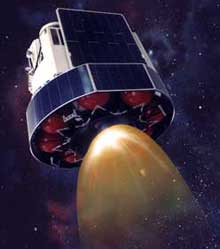
 For the stage, at Jupiter we'll use the Integrated Apogee Boost Subsystem (IABS) stage.
 An artist's concept of a DSCS satellite being boosted by the IABS. Photo: U.S. Air Force
 
 This is a small kick-stage used to put geosynchronous satellites in their final orbits. It has a 1,578 kg gross mass and 275 kg dry mass, for a 1,303 kg propellant mass, and a 312 s Isp. Then this could provide a 220 kg spacecraft with the 3.92 km/s delta-v needed to land on Europa:
312*9.81ln(1 + 1303/(275 + 220)) = 3,947 m/s. 
 The Falcon 9 v.1.1 costs in the range of $56 million, the Ariane H10-3 cryogenic stage costs in the range of $12 million and the IABS stage costs in the range of $15 million, for a ca. $83 million launch cost.
 For a model of a low cost lander we might use the Mars Pathfinder mission. This weighed only 264 kg for the lander plus 10.5 kg for the rover. The development cost for the lander was less than $150 million. The development cost of  $150 million is quite low for a planetary mission. However,  privately financed it would be even less than that, perhaps as much as a factor of 10 cheaper.
  SpaceX was able to develop the Falcon 9 at a 90% (!) saving off  the development cost of a fully government-financed launcher of similar size. Planetary Resources Inc. plans to produce imaging satellites at a fraction of the usual cost.
Arkyd 100 space telescope.
 With mission costs this low we might want to produce a separate orbiter mission at Europa. As models for this we might use the small Mars orbiters Mars Odyssey and Mars Climate Orbiter.

Falcon Heavy sized launcher.

 The Falcon Heavy will allow a larger payload to be transported to the Europan surface. It is expected to be able to carry 53 metric tons to LEO. We'll use two Centaur stages together for the injection into a trajectory towards Jupiter. For the maneuvers at Jupiter, we'll use the storable propellant stage Delta K. This has a 6 mT propellant load, 0.95 mT dry mass, and 319 s Isp. Then it can provide a 1 mT spacecraft with the 3.9 km/s delta-v needed for the Europa landing:
319*9.81ln(1 + 6/(0.95 + 1)) = 4,397 m/s.
 The Centaur has several incarnations. It's propellant load is in the range of 20 mT, dry mass ca. 2 mT, and Isp ca. 451 s. Then two Centaurs together could provide the 6.3 km/s delta-v needed for the Jupiter flight carrying the 7.95 mT total mass of the Delta K stage + Europa lander:
451*9.81ln(1 + 40/(4 + 7.95)) = 6,500 m/s.
  The Falcon Heavy will cost in the range of $125 million. The Centaurs cost in the range of $30 million each and the Delta K stage costs ca. $4.35 million. Then the total launch cost will be in the range of $189.35 million.
 As a model of a 1 metric ton lander we might use the Mars Curiosity rover. This is a $1 billion mission however. The commercial space approach however should be able to produce a similar size spacecraft for a fraction of this cost.
 
   Bob Clark 
 

UPDATE, February, 20, 2015:

 The web traffic to the NASA web site for the Mars Exploration Rovers was even more extraordinary, measuring in the billions of hits:

NASA’s Web Site for 2005
By Digital Trends Staff — January 7, 2005
The U.S. National Aeronautics and Space Administration Web portal continues to drive high traffic numbers — more than 17 billion hits in 2004, report both NASA and Speedera Networks, a leading global provider of on-demand distributed application hosting and content delivery services. Speedera delivers content from the space agency’s portal to visitors seeking access to the site from around the world. Popular events on the NASA Web site, including the ongoing Mars Exploration Rover mission entering its remarkable second year, as well as upcoming major projects such as the launch and comet encounter of NASA’s Deep Impact satellite mission in 2005, are expected to drive continued high levels of traffic, according to NASA officials.
http://www.digitaltrends.com/computing/nasas-web-site-for-2005/

 It was estimated there were 142 million visits to the site during this period. So the question is how much advertising could be sold for a site this well visited?

Saturday, November 29, 2014

A half-size Ariane for manned spaceflight.

Copyright 2014 Robert Clark

 The current agreed  upon design for the Ariane 6 is to use a slightly reduced in size Ariane 5 core with strap-on solid boosters about half-size to the solids used on the Ariane 5:

Ariane 6.

   I believe this is a preferred solution for the Ariane 6 than the version using all solid lower stages. For one thing, if SpaceX succeeds in producing a reusable first stage, then ESA can keep pace by making the core stage of the Ariane 6 reusable.

 My ideal solution however would have used two to three Vulcain engines on the core stage. This would have an additional advantage of being able to be used as a manned launcher with no solids attached:

Friday, March 29, 2013
The Coming SSTO's: multi-Vulcain Ariane.
Copyright 2013 Robert Clark
http://exoscientist.blogspot.com/2013/03/the-coming-sstos-multi-vulcain-ariane.html


Single-Stage To Orbit Case. Still we can get a manned launcher retaining a single Vulcain II on the core and shrinking the size of the stage, to half-size. As discussed in the "The Coming SSTO's: multi-Vulcain Ariane" post, the propellant mass of the Ariane 5G core is 158,000 kg, with a 12,000 kg dry mass. We may remove a forward skirt called the "JAVE" used to attach the solids to the Ariane 5. This massed 1,700 kg bringing the dry mass down to 10,300 kg. The propellant tank on the Ariane 5G weighed 4,400 kg. So half-size this will weigh 2,200 kg, bringing the dry mass down to 8,100  kg. 
 In Dr. John Schilling's Launch Performance Calculator, enter in now also 79,000 kg for the propellant mass, 1,350 kN for the vacuum thrust and 434 s for the vacuum Isp. Select Kourou as the launch site with a launch inclination of 5.2 degrees, to match the launch site latitude. The "Restartable Upper Stage" option should be checked "No" even for a single stage, otherwise the payload will be reduced. Then the calculator gives:


Mission Performance:
Launch Vehicle:  User-Defined Launch Vehicle
Launch Site:  Guiana Space Center (Kourou)
Destination Orbit:  185 x 185 km, 5 deg
Estimated Payload:  2528 kg
95% Confidence Interval:  1064 - 4248 kg
"Payload" refers to complete payload system weight, including any necessary payload attachment fittings or multiple payload adapters
This is an estimate based on the best publicly-available engineering and performance data, and should not be used for detailed mission planning. Operational constraints may reduce performance or preclude this mission.

  This payload of 2,500 kg is for a single stage to orbit vehicle. As discussed in the blog post "Budget Moon flights: lightweight crew capsule", this may be sufficient for a 3-person capsule to LEO. For instance the Cygnus capsule given life support may fit within this size range. I have discussed though an SSTO reaches its best performance when using altitude compensation: "Altitude compensation attachments for standard rocket engines, and applications".

 By using altitude compensation the vacuum Isp can be raised to 466 s and the vacuum thrust to 1,350 kN*(466/434) = 1,450 kN. Schilling's calculator now gives a result of: 

Mission Performance:                  
Launch Vehicle:  User-Defined Launch Vehicle
Launch Site:  Guiana Space Center (Kourou)
Destination Orbit:  185 x 185 km, 5 deg
Estimated Payload:  4544 kg
95% Confidence Interval:  2894 - 6480 kg
"Payload" refers to complete payload system weight, including any necessary payload attachment fittings or multiple payload adapters
This is an estimate based on the best publicly-available engineering and performance data, and should not be used for detailed mission planning. Operational constraints may reduce performance or preclude this mission.


 As discussed in the "altitude compensation" blog post though characteristics of how the Schilling calculator makes its estimates may make it less accurate in a scenario using altitude compensation. A more accurate analysis that varies the Isp from ground to orbit may be needed in this case.

Two-Stage To Orbit Case.

 We can get a higher payload manned launcher by making it TSTO. We'll use the cryogenic upper stage the Ariane H10-3. The Astronautix page gives it a gross mass of 12,310 kg and dry mass of 1,570 kg, for a propellant mass of 10,740 kg. The Isp is listed as 446 s with a vacuum thrust of 62.70 kN. However, this extra mass for the upper stage would mean the single Vulcain II on the core could not loft it.


 Then we'll reduce the propellant load in the core stage. It might also work to run the Vulcain at some percentage above the rated thrust, or use a varied mixture ratio at launch compared to high altitude. But using a reduction of the propellant load method, we'll lessen the propellant in the first stage by the mass of the upper stage, so by 12,310 kg. This brings the propellant load of the first stage to 66,690 kg. There is about a 35 to 1 ratio of propellant to tank mass so this will reduce the tank mass of the first stage by 12,310 kg/35 =350 kg. Then the dry mass of the core becomes 7,750 kg.  Then the calculator gives:


Mission Performance:
Launch Vehicle:  User-Defined Launch Vehicle
Launch Site:  Guiana Space Center (Kourou)
Destination Orbit:  185 x 185 km, 5 deg
Estimated Payload:  4891 kg
95% Confidence Interval:  3970 - 5982 kg
"Payload" refers to complete payload system weight, including any necessary payload attachment fittings or multiple payload adapters
This is an estimate based on the best publicly-available engineering and performance data, and should not be used for detailed mission planning. Operational constraints may reduce performance or preclude this mission.


 We'll also estimate the payload for the altitude compensation case. Again take the first case vacuum thrust as 1,450 kN and the vacuum Isp as 466 s. But also improve the thrust and Isp for the upper stage, The thrust becomes 62.70 *(466/446) =  65.5 kN, with vacuum Isp also 466 s. Then the Schilling calculator gives:


Mission Performance:
Launch Vehicle:  User-Defined Launch Vehicle
Launch Site:  Guiana Space Center (Kourou)
Destination Orbit:  185 x 185 km, 5 deg
Estimated Payload:  6075 kg
95% Confidence Interval:  5016 - 7334 kg

"Payload" refers to complete payload system weight, including any necessary payload attachment fittings or multiple payload adaptersThis is an estimate based on the best publicly-available engineering and performance data, and should not be used for detailed mission planning. Operational constraints may reduce performance or preclude this mission.

 Again however this estimate for the altitude compensation case would have to be confirmed with more accurate estimation methods.


  Bob Clark

Saturday, November 15, 2014

Altitude compensation to allow the use of American engines on the Antares rocket.

Copyright 2014 Robert Clark

 In the blog post "Altitude compensation attachments for standard rocket engines, and applications", I noted that the idea that altitude compensation was only useful for SSTO's prevented their implementation and therefore their usefulness for multi-stage rockets was not realized. 

 An example of this is Orbital Sciences Antares rocket. The failed flight of the Antares in October, 2014 put renewed emphasis on the choice of 1960's era Russian engines AJ-26/NK-33. It is understandable why they were used since on the key performance metric of Isp, at 330+ s they were significantly better than American engines, at ca. 300 s. 

 However, by using altitude compensation the Isp of the low performance American rocket engines can even exceed that of the Russian engines. Orbital Sciences has decided not to use anymore of the Russian-derived engines on the Antares, and therefore need a replacement engine. I suggest investigating altitude compensation attachments that can made to already existing American engines so would be relatively low cost to implement.

 One possible engine that could be used would be the Rocketdyne RS-27A. It is used on the venerable Delta II rocket. Rocketdyne claims a 100% reliability record for the engine. You would need three of them though at ca. 200,000 lbs. thrust to make up for the two AJ-26/NK-33 engines at ca. 300,000 lb. thrust.

 How high could we get with the Isp on the RS-27A using altitude compensation? At an area ratio of only 12 to 1, the RS-27A only gets a vacuum Isp of 302 s. To see how much better we can do with a larger nozzle, we might make a comparison to the Russian RD-58, which gets a vacuum Isp of 349 s by using a high area ratio of 189 to 1 with not a particularly high chamber pressure of 78 bar. A better comparison might be to the Russian RD-0124 with a vacuum Isp of 359 s, but at a high chamber pressure of 162 bar. Unfortunately the area ratio of this engine is not specified, but it is certain to be high since it is an upper stage engine.

 Actually for vacuum Isp, just having a high nozzle area ratio is more important than the chamber pressure, a high chamber pressure being needed to insure a high sea level Isp. As a point of comparison, the hydrogen fueled RL-10B2 has only a chamber pressure of 39 bar but by using a nozzle extension to bring the area ratio to 280 to 1, it gets the highest Isp of any chemical engine at 465.5 s.

 Support for the idea a high area ratio on a kerosene engine can get a vacuum Isp of ca. 360 s even with a low chamber pressure is provided by the Rocket Propulsion Analysis program. Using the free Lite version you can estimate some fairly accurate vacuum Isp's for rocket engines, the sea level estimates though for the free version being not so accurate. Here are results using the specifications given on the Astronautix page on the RS-27A:


  The "Optimum Expansion" Isp number I've found to be a relatively accurate estimate for the actual vacuum Isp of existing engines. By the way, the negative values for the "Sea level" Isp are coming from the fact there would be severe losses for a low chamber pressure engine using such a large expansion ratio nozzle.

 Now compare this to the results if the chamber pressure were say 160 bar:


 You see the large increase in chamber pressure only adds minimally to the vacuum Isp, though it would have a great effect on the sea level Isp.

  So we'll take the vacuum Isp of the RS-27A with an adaptive nozzle attachment as 360 s. Now to calculate how much payload we can get on the Antares with these new engines I'll use the original's dry mass and propellant mass specifications here: Antares Launch Vehicle Information. The dry mass  of the first stage is given as 18,700 kg and the gross mass as 260,700 kg. 

 The two AJ-26 engines weighed 1,200 kg each for a total of 2,400 kg. The RS-27A weighs 1,000 kg, So three will be 3,000 kg. So the dry mass raises to 19,300 kg and the gross mass to 261,300 kg. I am assuming the adaptive nozzles can be made lightweight so as not to significantly increase the engine weight. The three RS-27A's though will have a lower liftoff thrust than the two AJ-26's. To make up for that I'll use a higher efficiency upper stage such as the hydrogen-fueled Ariane 4 H10-3 rather than the solid Castor stage now used.

 Now consider that we are assuming our adaptive nozzle will allow near optimal expansion from sea level to vacuum. Then note the RS-27A is a later edition of the RS-27 where the area ratio was increased from 8 to 1 to 12 to 1 to improve the vacuum Isp. But this reduces the sea level performance. The sea level Isp and thrust were reduced from 264 s and 93,357 kilogram-force (kgf) for the RS-27 to 255 s and 90,770 kgf for the RS-27A. But considering our adaptive nozzle I'll assume we are able to also get the 264 s Isp and 93,357 kgf thrust at sea level or perhaps do even better with a shorter nozzle equivalent at sea level. 

  At a 93,357 kgf liftoff thrust the total thrust at liftoff would be 280,071 kgf. The H10-3 stage has a gross mass of 13,100 kg. Then the total mass without payload will be 261,300 kg + 13,100 kg = 274,400 kg. This would result in a rather low thrust/weight ratio at liftoff which will reduce payload capacity through gravity drag.

 A couple of ways to improve this liftoff T/W ratio. First note on the page on the Antares linked above the specifications include the thrust at 108% of the "rated thrust". This is rather common that an engine can actually operate at a few percentage points above its rated thrust. This is the case for example with the Space Shuttle Main engines. If the RS-27A with adaptive nozzles can operate at 108% of its rated thrust that would bring the sea level thrust to 302,476 kgf.

  Another way to improve the liftoff T/W would be to reduce the propellant load by say 20,000 kg. As we'll see below the payload would still be rather high.

 We'll use Dr. John Schilling's launch performance calculator to estimate the payload possible. Select the Wallops launch site in the calculator and input the "inclination, deg" as 38, to match the Wallops site latitude.

 The calculator uses the vacuum values for the Isp and thrust inputs. This will be raised to 360 s for the Isp with our adaptive nozzles. But note also this increase in vacuum Isp also results in an increase in the vacuum thrust by a factor of the ratio of the Isp's, that is, by a factor of 360/302. Then the three RS-27A with adaptive nozzles will have vacuum thrust (360/302)*3*1054.20 kN = 3,700 kN.

 Input also the specifications for the Ariane 4 H10-3 for the second stage in the calculator. The HM7-B engine used on that stage has a vacuum Isp of 447 s. Then the results are:

Mission Performance:
Launch Vehicle:  User-Defined Launch Vehicle
Launch Site:  Wallops Flight Facility
Destination Orbit:  185 x 185 km, 38 deg
Estimated Payload:  9458 kg
95% Confidence Interval:  7735 - 11589 kg

 The estimate of 9,458 kg is nearly twice the payload of the current Antares. Notably though this is using the high efficiency hydrogen-fueled upper stage.

 To address the low liftoff T/W I mentioned one way was to reduce the propellant load by, say, 20,000 kg. Doing this results in a payload of:

Mission Performance:
Launch Vehicle:  User-Defined Launch Vehicle
Launch Site:  Wallops Flight Facility
Destination Orbit:  185 x 185 km, 38 deg
Estimated Payload:  8764 kg
95% Confidence Interval:  7166 - 10736 kg

 Still a pretty high result.  

 A consideration in regards to the accuracy of this estimate however is the effect of the altitude-compensating high vacuum Isp compared to the assumptions that go into the calculator. The Schilling calculator takes the vacuum Isp and thrust as inputs and automatically takes into account the reductions at sea level. However, since it assumes it is using a fixed nozzle it would assume the sea level Isp and thrust are much closer to the vacuum values than they would be in this scenario. On the other hand the altitude compensating nozzle would not have the losses of a fixed nozzle. Then more accurate payload calculators that take into account the variations of Isp and thrust with altitude would need to be used to get a more accurate estimate of the payload to orbit.


  Bob Clark

Tuesday, May 27, 2014

Towards a low cost lander for the Moon - and Mars.

Copyright 2014 Robert Clark

 I was pleased to see Masten Space Systems' Xeus lunar lander won at least an unfunded SAA through the NASA Lunar Catalyst program:


Masten's XEUS lander. 
Credit: NASA/Masten Space Systems, Inc.

 Dave Masten and Masten Space Systems became well known among space advocates for winning the $1 million NASA Lunar Lander challenge. However, another interesting focus of his is on a Centaur-derived horizontal lander for manned landings, the Xeus lander. ULA has written articles on such a concept but Masten using a ULA donated surplus Centaur is actually working on testing one. Quite notable is that Masten believes such a lander can be developed for a few 10's of millions of dollars, orders of magnitude less than the multi-billion dollars usually estimated.If so, then this could be a low cost approach to return to the Moon.
Masten discusses this lander at about the 15 minute mark in this SpaceVidCast video:

A (mostly) commercial architecture for solar system exploration - YouTube.
>


 However, I feel the connection between such a lunar lander, which can be reusable,
and a Mars manned lander still is not properly appreciated by NASA. This point was made by Mike Raftery of Boeing et.al. in a recent FISO presentation:

 IAC-13, A5, 4-D2.8.4AN AFFORDABLE MISSION TO MARS.
"A lunar landing could also be on the path to Mars. The Moon could be used as a test bed for the surface systems and lander propulsion systems which will ultimately be needed for Mars. The delta velocity requirement for the Mars ascent vehicle is about 5000 meters/second; very close to what would be needed for a reusable lunar lander 5."
http://spirit.as.utexas.edu/~fiso/telecon/Raftery_5-14-14/extra-%20An%20Affordable%20Mission%20to%20Mars.pdf

  Then dismissal of any plans of "return to the moon" is like cutting off your nose to spite your face. And indeed once you realize this fact, natural variations on Masten's idea that have important ramifications become readily apparent. Our European ISS partners do still have an interest in manned lunar missions. Such interest would be even greater if using European components. So a natural variation on Masten's idea would be to use an ESA stage to form the horizontal lander. And such a hydrogen-fueled stage does indeed exist in the Ariane H10-3.  Moreover this is half-size to the Centaur so would result in a half-size lunar mission scale compared to that of the Centaur-based mission. 

 After running the numbers I was surprised to see such a lunar mission could be launched by a single Ariane 5, or Delta IV Heavy, plus a single man-rated medium lift launcher, Falcon 9, Atlas V, Soyuz, etc., to carry the crew to LEO. A quite key fact also is the IMLEO for a Mars mission is dependent on the size of the elements that need to be delivered to Mars. Then such a small Mars lander would result in a significant reduction in the IMLEO mass for a Mars mission. 

 All this becomes apparent once you open yourself up to the idea a lunar mission might be useful towards accomplishing a Mars mission. Or as I like to phrase it, "Free your mind, and the rest will follow."
   

  Bob Clark 

Could Blue Origin develop a lander for Artemis III?

Copyright 2025 Robert Clark SpaceX is coming under increasing criticism for its delay in developing the Starship lunar lander: U.S. Is Losin...